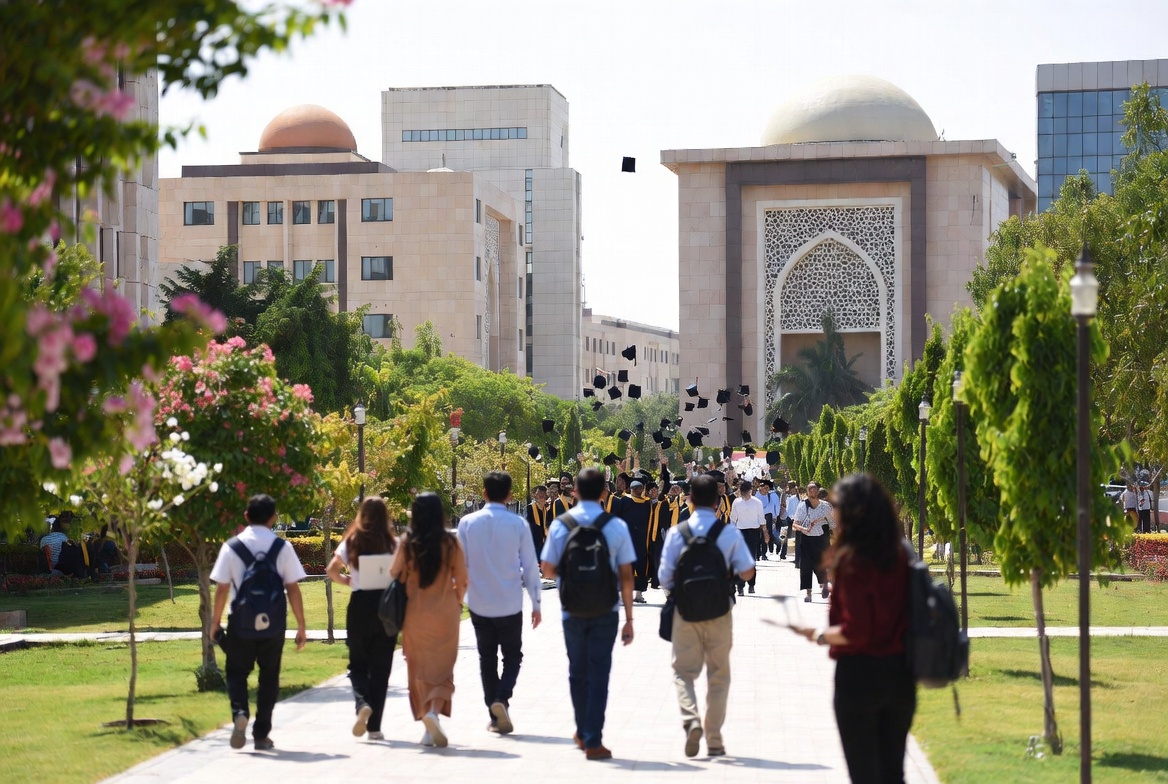
Navigating Pakistan Higher Education System
Education is the cornerstone of national development, and Pakistan higher education sector has witnessed remarkable transformation over the past two decades. With over 200 universities serving more than 1.5 million students, the country offers diverse educational pathways. This comprehensive guide explores everything students and parents need to know about pursuing higher education in Pakistan.
Understanding Pakistan Education Structure
Pakistan education system follows a structured pathway:
- Primary Education: Grades 1-5 (ages 5-10)
- Middle Education: Grades 6-8 (ages 11-13)
- Secondary Education: Grades 9-10, culminating in Matriculation exams
- Higher Secondary: Grades 11-12, leading to Intermediate (F.Sc/F.A) certification
- Undergraduate: 4-year bachelor programs (BS/BBA/BA) or 2-year associate degrees
- Graduate: MS/M.Phil programs (1.5-2 years)
- Doctoral: PhD programs (3-5 years)
Top Universities in Pakistan: 2026 Rankings
Engineering and Technology Universities
National University of Sciences and Technology (NUST), Islamabad
Consistently ranked as Pakistan top university, NUST excels in engineering, computer science, and business education. The university maintains strong industry linkages and research output.
Pakistan Institute of Engineering and Applied Sciences (PIEAS), Islamabad
Specializing in nuclear engineering, materials science, and physics, PIEAS offers some of the most competitive programs in the country.
Ghulam Ishaq Khan Institute (GIKI), Swabi
Known for its rigorous engineering curriculum and beautiful campus, GIKI produces highly sought-after graduates.
University of Engineering and Technology (UET), Lahore
As Pakistan oldest engineering institution, UET Lahore has a vast alumni network and strong reputation.
Medical Universities
Aga Khan University (AKU), Karachi
AKU Medical College is internationally recognized and follows a curriculum comparable to top US medical schools.
King Edward Medical University, Lahore
One of the oldest and most prestigious medical institutions in South Asia.
Dow University of Health Sciences, Karachi
Offering comprehensive medical and allied health programs with modern facilities.
Business and Management
Lahore University of Management Sciences (LUMS)
Pakistan premier business school with strong liberal arts and science programs. LUMS graduates are highly recruited by multinational corporations.
Institute of Business Administration (IBA), Karachi
The oldest business school outside North America, IBA maintains rigorous academic standards.
Shaheed Zulfikar Ali Bhutto Institute of Science and Technology (SZABIST)
Strong programs in management sciences, computing, and media studies across multiple campuses.
Liberal Arts and Social Sciences
Quaid-i-Azam University, Islamabad
Excellence in natural sciences, social sciences, and humanities research.
Forman Christian College, Lahore
A chartered university with American-style liberal arts education.
Habib University, Karachi
Pakistan first liberal arts and sciences university with an innovative curriculum.
Scholarship Opportunities for Pakistani Students
Financial constraints shouldn prevent talented students from pursuing higher education. Numerous scholarship programs exist:
Government Scholarships
- HEC Need-Based Scholarships: For students at public sector universities demonstrating financial need.
- Ehsaas Undergraduate Scholarship: 50,000 scholarships annually for students from low-income families.
- PEEF Scholarships: Punjab Educational Endowment Fund supports meritorious students from Punjab.
- US-Pakistan Knowledge Corridor: PhD scholarships for Pakistani scholars to study in US universities.
University-Specific Scholarships
- LUMS National Outreach Program: Full scholarships for talented students from underprivileged backgrounds.
- NUST Merit Scholarships: Tuition fee waivers for top-performing students.
- AKU Scholarship Program: Need-blind admissions with generous financial aid.
International Scholarships
- Fulbright Program: Fully-funded masters and PhD studies in the United States.
- Commonwealth Scholarships: For masters and PhD studies in the UK.
- Erasmus Mundus: European Union scholarships for joint master degrees.
- DAAD Scholarships: German Academic Exchange Service programs for Pakistani students.
Emerging Fields of Study for 2026 and Beyond
The job market is evolving rapidly. Students should consider these high-growth fields:
1. Artificial Intelligence and Data Science
With AI transforming every industry, expertise in machine learning, deep learning, and data analytics is in high demand. Pakistani universities are rapidly introducing specialized AI programs.
2. Cybersecurity
As digital transformation accelerates, organizations need professionals who can protect systems and data. Pakistan faces a significant shortage of qualified cybersecurity experts.
3. Renewable Energy Engineering
Climate change concerns and Pakistan energy challenges make renewable energy expertise valuable. Solar, wind, and hydropower projects need skilled engineers.
4. Bioinformatics and Biotechnology
The intersection of biology and computing offers solutions for healthcare, agriculture, and environmental challenges.
5. Digital Marketing and E-Commerce
The growth of online businesses creates demand for professionals who understand digital consumer behavior and online sales strategies.
6. Financial Technology (FinTech)
Digital payments, blockchain, and algorithmic trading are reshaping finance, requiring professionals with both financial and technical expertise.
Career Planning and Industry Connections
Success after graduation requires more than just a degree:
Internships and Work Experience
Leading companies like Systems Limited, Netsol, and multinational corporations offer internship programs. These experiences provide practical skills and professional networks.
Professional Certifications
Complement your degree with industry-recognized certifications:
- Project Management Professional (PMP)
- Certified Information Systems Security Professional (CISSP)
- AWS Certified Solutions Architect
- Google Analytics Certification
Networking and Professional Associations
Join professional bodies like Pakistan Engineering Council (PEC), Institute of Chartered Accountants of Pakistan (ICAP), or Pakistan Bar Council depending on your field.
The Rise of Online and Distance Learning
The COVID-19 pandemic accelerated adoption of online education. Virtual University of Pakistan and Allama Iqbal Open University have decades of distance learning experience. International platforms like Coursera, edX, and Udemy offer affordable access to courses from top global universities.
Many traditional universities now offer hybrid programs combining online coursework with limited on-campus requirements, making education more accessible.
Challenges in Pakistan Education Sector
Despite progress, significant challenges remain:
- Access Disparities: Rural areas and certain provinces have limited access to quality higher education institutions.
- Gender Gap: Female enrollment in higher education has improved but still lags behind male enrollment, particularly in STEM fields.
- Research Funding: Limited research grants and outdated laboratory equipment constrain innovation.
- Curriculum Relevance: Some programs don adequately prepare students for current industry needs.
- Faculty Development: Shortage of qualified PhD faculty in many disciplines.
Conclusion: Building Your Educational Journey
Pakistan higher education landscape offers tremendous opportunities for motivated students. Success requires careful planning, research into programs and institutions, and taking advantage of available resources including scholarships and mentorship.
Remember that education is not just about earning a degree—it about developing critical thinking skills, building professional networks, and preparing for lifelong learning. As Pakistan economy evolves and integrates with global markets, well-educated professionals will drive the nation progress.
Whether you choose engineering, medicine, business, arts, or emerging fields like AI and renewable energy, the key is aligning your education with your passions and career goals. With dedication and the right support, Pakistani students can compete and excel on the global stage.