1. What Exactly Happened? A Quick Timeline
For eight years, cryptocurrency existed in Pakistan the way a lot of things do here — widely used, openly discussed, but officially invisible. Tens of millions of Pakistanis were trading Bitcoin and Ethereum through offshore exchanges, peer-to-peer networks, and informal channels while the government maintained an awkward silence. The State Bank had banned banks from touching crypto in 2018. Yet Pakistan quietly became one of the biggest crypto markets on the planet.
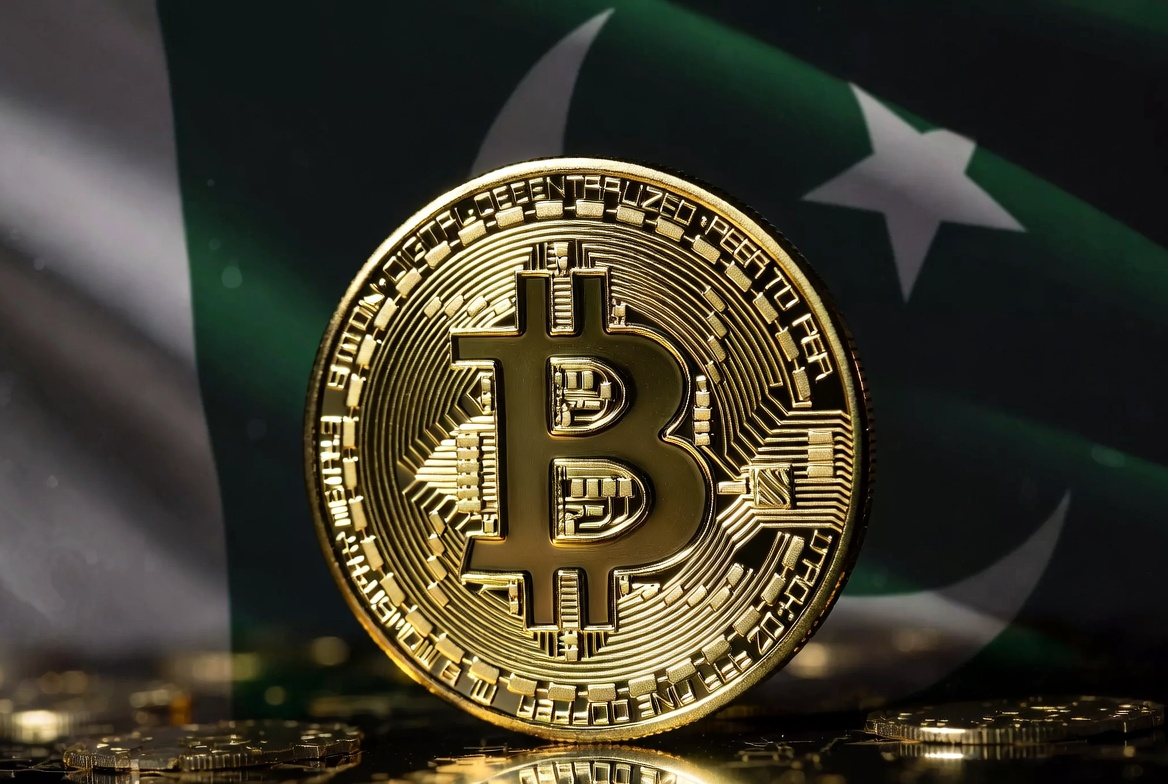
Then 2026 arrived — and everything changed. Cryptocurrency in Pakistan is now formally, legally, and unambiguously permitted. Parliament passed the Virtual Assets Act 2026. The State Bank of Pakistan lifted its seven-year banking ban. A new national regulator — the Pakistan Virtual Assets Regulatory Authority, or PVARA — is issuing licences, setting rules, and bringing order to what was once a financial grey zone. If you are one of Pakistan's estimated 40 million crypto users, this article is the most important thing you will read this year. Here is exactly what changed, what it means for you, and what comes next.
To understand why 2026 is such a turning point, you need to know where Pakistan started.
2018: The State Bank of Pakistan issues a circular banning all banks and financial institutions from facilitating cryptocurrency transactions. Crypto trading does not stop — it simply moves underground, onto P2P platforms and offshore exchanges beyond Pakistan's reach.
2025: Pakistan establishes the Pakistan Crypto Council (PCC) and passes the Virtual Assets Ordinance, creating PVARA as a provisional regulator. The government acknowledges that roughly 40 million, or about 17% of the Pakistani population, are already involved in crypto trading. Ignoring this reality any longer was simply not an option.
February 2026: Pakistan's Senate committee approves the Virtual Assets Act 2026. The draft bill sets out rules on how cryptocurrency will be managed and how crypto exchanges should operate in the country.
March 2026: Parliament passes the Virtual Assets Act 2026, turning the temporary ordinance into permanent law and creating a national regulator to oversee exchanges, wallet providers, and other crypto businesses — marking one of the most dramatic policy reversals in Pakistan's financial history.
April 15, 2026: Pakistan's central bank lifts its blanket ban on crypto services, allowing banks and financial institutions to serve licensed crypto firms under the new regulatory framework.
In under two years, Pakistan went from one of the most restrictive crypto environments in Asia to a country with a formal, comprehensive regulatory structure. That is remarkable by any standard.
2. What Is the Virtual Assets Act 2026?
Think of the Virtual Assets Act 2026 as Pakistan's cryptocurrency constitution — the foundational document that defines what is allowed, who oversees it, and what happens when rules are broken. The Act establishes a clear regulatory framework for cryptocurrencies, blockchain assets, and virtual asset service providers. At its core, it defines virtual assets broadly as digital representations of value — including Bitcoin, Ethereum, stablecoins, NFTs, and tokenized securities — that can be traded, transferred, or used for payments and investment on blockchain or distributed ledger technology.
Here is what the law actually does in practical terms:
- It makes holding, buying, and selling approved cryptocurrencies fully legal for individuals and businesses
- It requires any company offering crypto services in Pakistan to obtain a licence from PVARA
- It enforces strict anti-money laundering (AML) and know-your-customer (KYC) requirements on all platforms
- It bans privacy coins and any crypto-related fraudulent schemes outright
- It aligns Pakistan's crypto framework with global FATF (Financial Action Task Force) standards — critical for Pakistan's international financial standing
Instead of prohibition, Pakistan now views regulation as a tool for economic inclusion and growth. Licensed operations replace grey-market risks, while innovation in mining, tokenization, and stablecoins can develop under regulatory oversight. This is not just a legal technicality. It is a fundamental shift in how the Pakistani state views digital money.
3. What Is PVARA and Why Does It Matter?
PVARA — the Pakistan Virtual Assets Regulatory Authority — is the body that will determine whether Pakistan's crypto experiment succeeds or stumbles. PVARA is designated as an autonomous regulator. It introduces strict licensing requirements, enforces global AML and counter-terrorism financing standards, and imposes significant penalties for violations.
Specifically, PVARA has the power to:
- Issue and revoke licences for crypto exchanges, wallet providers, and other virtual asset service providers
- Regulate which cryptocurrencies are approved for trading in Pakistan
- Conduct market surveillance and prevent price manipulation
- Issue licences for Bitcoin mining operations
- Advise the government on stablecoins, tokenization, and emerging blockchain technologies
- Fine or shut down companies that break the rules
Binance and HTX were among the first to secure PVARA licences, giving Pakistani traders access to major platforms without legal worries. This is significant — Binance is the world's largest crypto exchange by trading volume, and its Pakistan licence is a powerful signal that serious international players are taking the country's new framework seriously. The practical takeaway: if you plan to trade crypto in Pakistan, always check whether the platform holds a PVARA licence. Using an unlicensed exchange now carries real legal risk — and offers you no regulatory protection if something goes wrong.
4. The Banking Ban Is Lifted — What Does That Mean?
This is perhaps the single most consequential change for everyday Pakistani crypto users. For seven years, the banking ban was the biggest practical obstacle to legal crypto trading. You could not easily move rupees from your bank account onto a crypto platform or receive crypto earnings into your Pakistani bank account without risking your account being flagged or frozen. That is now over.
The State Bank of Pakistan notified all banks and financial institutions that the ban on providing crypto services has been lifted. Banks may now open accounts for virtual asset service providers approved by PVARA. However — and this is important to understand — the new rules are not a free-for-all. Banks remain barred from trading, investing in, or holding crypto with their own funds or customer deposits. Your bank will not be buying Bitcoin with your savings. What changes is that banks can now legally service regulated crypto businesses, and you can move money between your bank account and a PVARA-licensed exchange without fear.
For freelancers, remote workers, and businesses that receive crypto payments from international clients, this is life-changing. The banking system is no longer an obstacle — it is now part of the solution.
5. How to Buy and Trade Crypto Legally in Pakistan Now
Let's get practical. Here is how to participate in Pakistan's crypto market legally in 2026.
Step 1: Choose a PVARA-licensed exchange. Only use platforms that hold a valid PVARA licence. As of mid-2026, Binance and HTX have licences. More are expected. Check PVARA's official website for the current list before registering anywhere.
Step 2: Complete your KYC. You will need to follow KYC requirements to trade on any licensed platform. This means uploading your CNIC, a selfie, and possibly proof of address. It takes minutes and protects you legally.
Step 3: Link your bank account. With the banking ban lifted, you can now transfer rupees directly from your bank account to a licensed exchange. Follow your exchange's instructions for this — the process differs slightly by platform.
Step 4: Buy approved cryptocurrencies. PVARA maintains a list of approved digital assets that licensed exchanges can offer. Bitcoin, Ethereum, and most major cryptocurrencies are available. Privacy coins like Monero are not permitted.
Step 5: Keep records of everything. Every trade, every purchase, every withdrawal. You will need these for your annual FBR tax filing. More on that below.
One caution worth repeating: the existence of a legal framework does not mean all risk disappears. Crypto remains highly volatile. Never invest money you cannot afford to lose, and always do your own research before buying any asset.
6. Crypto Taxes in Pakistan: What You Owe the FBR
Nobody loves talking about taxes. But getting this wrong is far more painful than understanding it upfront. Cryptocurrency trading in Pakistan is subject to a 15% capital gains tax. Tax filing deadlines follow the regular FBR schedule, typically September 30th for salaried individuals. Missing deadlines means penalties and interest.
Here is what that means in practice:
- If you buy Bitcoin at Rs 8,000,000 and sell it at Rs 10,000,000, your gain is Rs 2,000,000
- You owe 15% capital gains tax on that Rs 2,000,000 — which is Rs 300,000
- This needs to be declared in your annual FBR tax return
The good news is that holding crypto without selling it does not trigger a tax event. You only pay when you realise a gain by selling or exchanging. Losses can be used to offset gains in the same tax year — so if one trade loses Rs 500,000 and another gains Rs 800,000, you are taxed on Rs 300,000, not the full Rs 800,000. Keep a spreadsheet of every trade with the date, amount, price paid, and price received. Your future self will thank you enormously come filing season.
7. Bitcoin Mining in Pakistan: Suddenly a Real Opportunity
Here is one aspect of Pakistan's crypto future that is not getting nearly enough attention: Bitcoin mining. Pakistan has a significant electricity surplus during certain hours, particularly from hydroelectric sources. Channelling that surplus energy into Bitcoin mining is not just financially attractive — it is economically logical.
The government is pushing crypto mining operations using surplus electricity, turning excess power into economic value. Several mining farms have already set up operations with government support. Under the Virtual Assets Act 2026, PVARA has the power to give licences for crypto mining. This means both large-scale commercial mining operations and individual miners can operate with legal clarity they never had before.
For individuals interested in small-scale mining at home: it is legal, but the economics depend heavily on your electricity cost and the hardware you can afford. With Pakistan's electricity tariffs, home mining is only profitable on very efficient machines. Commercial-scale operations with access to cheap industrial electricity make far more financial sense.
8. Pakistan's Bigger Crypto Ambitions: Stablecoins, Bitcoin Reserve, and Tokenization
The Virtual Assets Act is not the ceiling of Pakistan's crypto ambitions. It is the floor. The government has been quietly working on something far more ambitious — and it deserves serious attention.
National Stablecoin: Pakistan is pursuing plans for a national stablecoin. A stablecoin pegged to the Pakistani rupee would allow instant cross-border payments without the volatility of Bitcoin or Ethereum. For a country that receives over $38 billion in annual remittances, a faster and cheaper payment rail could transform the economy.
Tokenized State Assets: In December 2025, the government of Pakistan and Binance signed a memorandum of understanding allowing the world's largest crypto exchange to explore the tokenization of up to $2 billion in bonds, treasury bills, and commodity reserves. Tokenizing government bonds means ordinary citizens could buy fractional shares of government debt instruments — democratizing access to investments that were previously only available to banks and institutions.
Remittances via Crypto: Pakistan Crypto Council Chairman said that if cryptocurrency becomes a stable digital currency, overseas Pakistanis could transfer remittances within moments, potentially increasing annual remittances from $38 billion to $50 billion. That is not a small number — that is a potential $12 billion annual boost to Pakistan's foreign exchange inflows.
Strategic Bitcoin Reserve: The Pakistan Crypto Council has announced plans for a strategic Bitcoin reserve, joining other nations exploring crypto as part of national reserves. El Salvador did it first. The US followed. Pakistan may not be far behind.
These are not distant fantasies. These are active government initiatives with real timelines and real partnerships behind them.
9. What Is Still Not Allowed
In the excitement of legalization, it is worth being very clear about what the new framework does not permit. You cannot use crypto to buy goods and services in Pakistan. The rupee maintains its monopoly as legal tender. The Virtual Assets Act keeps crypto firmly in the investment asset category. Privacy coins like Monero are banned. Any crypto-related Ponzi schemes, pump-and-dump operations, or using crypto for money laundering will result in serious legal consequences.
Additionally:
- Banks cannot invest their own funds or customer deposits in crypto
- Operating a crypto exchange without a PVARA licence is illegal
- Using crypto to evade taxes or launder money carries criminal liability
- Unlicensed stablecoin issuance is prohibited
The framework is permissive in the right places and strict in the right places. Pakistan wants to attract legitimate crypto activity — not become a haven for financial crime.
Frequently Asked Questions
Q: Is crypto legal in Pakistan in 2026?
A: Yes, fully. Parliament has passed the Virtual Assets Act 2026, creating a permanent legal framework for cryptocurrencies and digital assets in Pakistan. Holding, buying, and trading approved cryptocurrencies through licensed exchanges is legal.
Q: Which crypto exchanges are licensed in Pakistan?
A: Binance and HTX were among the first to secure PVARA licences. The list is growing. Always verify on PVARA's official website before using any platform, as unlicensed exchanges offer no regulatory protection.
Q: Do I have to pay tax on crypto gains in Pakistan?
A: Yes. A 15% capital gains tax applies to profits from crypto trading, and earnings must be declared in your annual FBR tax return by the September 30th deadline. Keep detailed records of every trade.
Q: Can I use my Pakistani bank account for crypto now?
A: Yes, with a licensed exchange. The State Bank of Pakistan has lifted its seven-year ban, allowing banks to open accounts for PVARA-licensed crypto service providers. You can now fund and withdraw from licensed exchanges using your local bank account.
Q: Is Bitcoin mining legal in Pakistan?
A: Yes. Bitcoin mining is legal and actively encouraged by the government. Several mining farms have already set up operations with government support, and PVARA issues licences for commercial mining operations.
Conclusion: Pakistan's Crypto Revolution Has Only Just Begun
What Pakistan pulled off in 2026 is genuinely historic. A country that banned crypto in 2018 — that told its banks to have nothing to do with digital assets — has now built one of the most comprehensive crypto regulatory frameworks in South Asia. It happened fast, and it happened because the reality was impossible to ignore: Pakistan's crypto market volume crossed $20 billion, with 25 to 30 million people already trading through informal channels. You cannot ban something that one-sixth of your population is already doing. The smart move was always regulation — not prohibition. Pakistan finally made that move.
For ordinary Pakistanis, the implications are enormous. Freelancers can receive crypto payments without hiding them. Investors can trade Bitcoin legally and with platform protection. Families can soon receive remittances faster and cheaper than any bank wire can manage. And a generation of young Pakistanis who learned about DeFi, NFTs, and blockchain on YouTube now have a legal home for their skills and ambitions.
The framework is young. The licences are new. The regulator is still building its infrastructure. There will be bumps ahead — that is inevitable with any major policy shift of this scale. But the direction is set. Pakistan has chosen to participate in the global digital economy rather than watch it from the sidelines. If you have been waiting for the right moment to explore crypto legally in Pakistan — that moment is now.
Disclaimer: This article is for informational purposes only and does not constitute financial or legal advice. Cryptocurrency investments carry significant risk. Always do your own research and consult a qualified financial advisor before making any investment decisions.