How We Got Here: The Full Price Journey
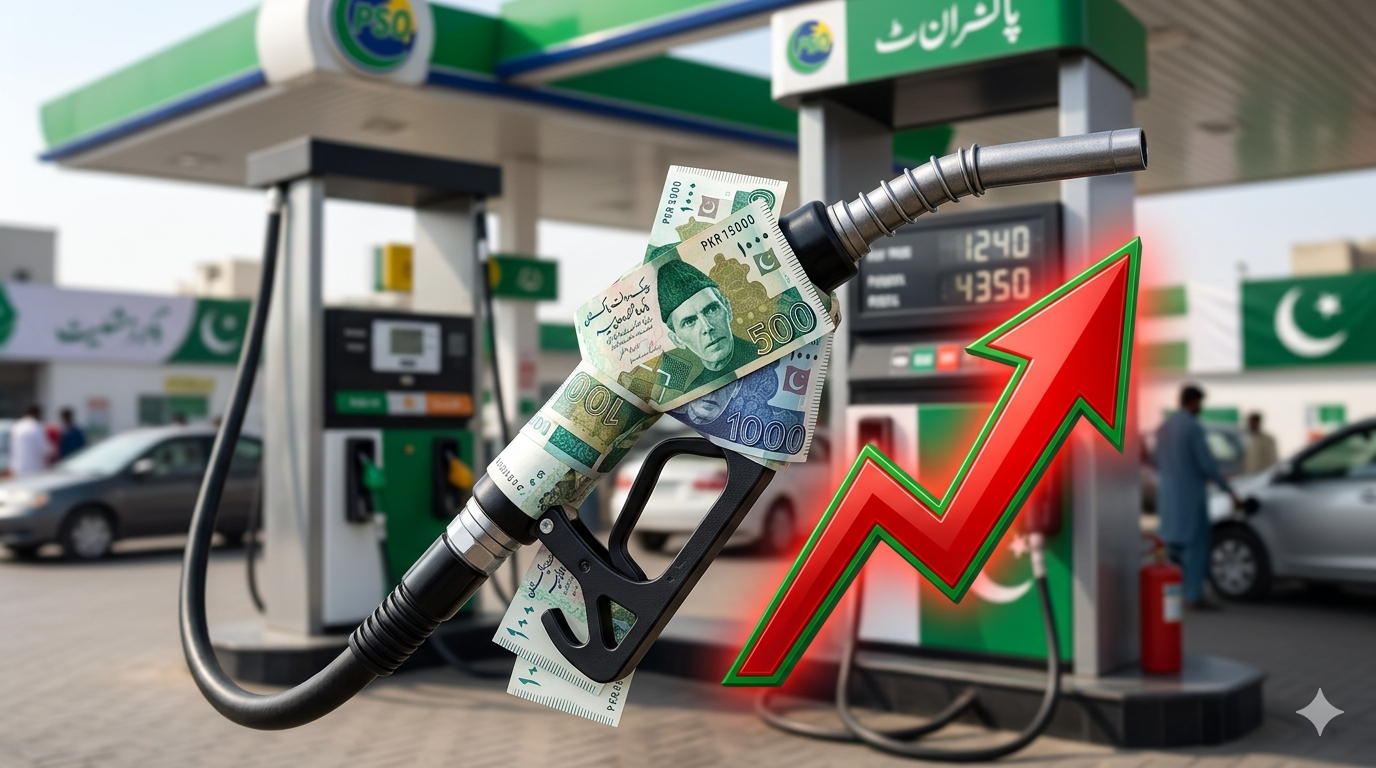
If you filled your tank this week, you already felt it. If you did not — check the prices before you go to the pump today, because they changed again last night. The federal government on Friday once again increased the prices of petroleum products. The price of petrol was raised by Rs 14.92 per litre, bringing the new price to Rs 414.78 per litre. Simultaneously, the government hiked the price of high-speed diesel by Rs 15, bringing it to Rs 414.58 per litre. The revised prices came into effect from May 9, 2026.
This is not a one-off shock. It is the fourth time since the Iran War that the government has increased the prices of petroleum products. The increases are arriving weekly now — not fortnightly as they used to — because the global oil market is moving that fast. If you are wondering how petrol went from Rs 253 in early 2025 to Rs 414 in May 2026 — and what you can actually do about the impact on your household budget — this article gives you the complete, honest picture.
To understand today's price, you need to see the full arc of what has happened. From May 2025 to early 2026, petrol prices in Pakistan hovered mostly between Rs 253 and Rs 266 — a period of unusual stability by Pakistan's historical standards. Then March 2026 arrived and everything changed. Prices surged above Rs 450 per litre in April 2026, representing the biggest single-day hike in Pakistan's recorded fuel price history, before partial reductions brought them down to around Rs 393. Now they are climbing again toward Rs 415.
The increase marks the third straight weekly fuel price hike, following the government's Rs 33.28 increase in petrol and Rs 46.16 increase in diesel over the previous two weeks alone. Add those numbers up. In less than a month, petrol has increased by roughly Rs 48 per litre from where it was at the start of May. A motorcycle tank that cost Rs 800 to fill three weeks ago now costs over Rs 1,000. A car tank that cost Rs 4,000 now costs Rs 5,200 or more. For most Pakistani families, that is not a number on a screen. It is money that was supposed to go toward groceries, school supplies, or utility bills.
Why Prices Are Rising This Fast
There are three forces pushing petrol prices up simultaneously — and none of them are fully within Pakistan's control.
The Iran War and Oil Supply Routes
This is the primary driver of everything happening right now. The latest revision follows continued volatility in international oil markets amid geopolitical tensions and concerns over global fuel supply disruptions. Market observers believe the government had little fiscal space to absorb the rising import cost of petroleum products. The ongoing geopolitical tensions involving the US, Israel, and Iran have disrupted international oil supply routes, especially through the Strait of Hormuz — a critical passage handling nearly one-fifth of the world's oil supply.
When one-fifth of the world's oil supply faces disruption risk, prices spike globally. Brent crude futures rose to $101.47 a barrel on Friday, up 1.41%, while West Texas Intermediate gained to $95.71 a barrel. Oil at $100 a barrel is a threshold that triggers significant pain for import-dependent countries like Pakistan.
How Pakistan Sets Petrol Prices
Understanding the pricing formula helps you understand why the government has limited ability to simply absorb these costs. OGRA calculates a recommended price every week using a formula based on six components: the international crude cost converted at the prevailing USD/PKR exchange rate, port and import charges, inland freight, oil company margins, dealer commissions, and government taxes. Every $1 change in Brent crude equals approximately Rs 1.50 to Rs 2.00 per litre at the pump. Every Rs 1 depreciation of the rupee equals approximately Rs 0.60 to Rs 0.80 per litre. When crude oil rises by $20 a barrel — which has happened in recent weeks — that translates to Rs 30 to Rs 40 per litre at the pump. Combined with any rupee weakness and import cost increases, you quickly reach the scale of increases Pakistan has been experiencing.
The Heavy Tax Burden Built Into Every Litre
Here is the part of the petrol price story that gets far too little attention. Consumers are now paying over Rs 150 per litre in taxes alone on petrol. Major components include petroleum levy of Rs 103.50, customs duty of Rs 23.72, freight of Rs 17.14, and dealer and industry margins. Taxes make up about 32% of the final price at the pump. Over Rs 150 of the Rs 414 you pay per litre goes directly to the government as taxes — before a single rupee covers the actual cost of the fuel. The petroleum levy alone at Rs 103.50 per litre is the government's primary revenue tool, one that the IMF programme has pushed it to maintain rather than reduce.
This is the fundamental tension in Pakistan's fuel pricing: the government needs petroleum levy revenue to meet its fiscal targets under the IMF programme. Cutting the levy provides relief but creates a budget shortfall that has to be filled somewhere else. Previous attempts to provide fuel relief through levy cuts provided only temporary help before prices climbed again.
Who Gets Hit Hardest
Not everyone feels this equally. Some sectors and communities face significantly more severe consequences.
Motorcyclists and rickshaw drivers. Petrol fuels small vehicles, rickshaws, and two-wheelers, making the increase directly relevant for commuters and household transport budgets. The millions of Pakistanis who commute by motorcycle — the most common vehicle in the country — have no meaningful alternative when prices rise. They simply pay more and have less left for everything else.
Transport and logistics sector. High-speed diesel powers trucks, buses, trains, and agricultural machinery, which feeds directly into transport costs and food prices. When diesel rises by Rs 15 per litre, the trucking industry raises freight charges. Those higher freight charges appear in the prices of vegetables, flour, milk, and every other essential that travels from farms to city markets.
Small businesses. Generators in areas with load shedding run on diesel or petrol. A small workshop, a kiryana store with a fridge, a tailor's shop with a sewing machine — all face higher operating costs that either squeeze margins or get passed on to customers.
Farmers. Agricultural machinery, tube wells, and transport of produce all depend on fuel. Higher fuel costs at planting and harvest time directly reduce farm profitability and eventually push up food prices for urban consumers.
What the Price Increase Does to Everything Else
The thing about petrol and diesel prices is that they do not stay contained to the fuel pump. They travel through the entire economy like a wave. Market analysts are warning that the latest hike could trigger another wave of inflation across the country. Petrol and diesel prices are already connected to elevated electricity tariffs, rising transport fares, and expensive food items that consumers across Pakistan are already struggling with.
The mechanism works like this. Diesel price rises. Truck owners charge more per trip. Wholesalers pay more for delivered goods. Retailers mark up prices to cover higher costs. Consumers pay more for the same items at the market. The farmer who saw input costs rise plants slightly less next season. Availability tightens and prices rise again. Pakistan's April inflation number of 10.9% — the highest in nearly two years — was already reflecting the fuel price increases from March and early April. The May increases will push that figure higher still when May data is published next month.
Is Any Relief Coming?
This is the question every Pakistani is asking right now — and the honest answer is: not immediately, and not significantly. The primary cause of rising prices is the Middle East conflict and its effect on global oil markets. Pakistan's diplomats are actively engaged in the US-Iran peace talks as mediators. Pakistan is playing a key role in de-escalating the situation between Iran and the US. The continuous increase in petroleum product prices is a clear reflection of the conflict — if this tension is not settled, the burden of high fuel costs will turn the lives of citizens into a nightmare.
A genuine ceasefire and reopening of the Strait of Hormuz would bring oil prices down significantly — probably to the $75-80 range from the current $100+ level. That would translate to meaningful petrol price relief in Pakistan within a week or two of any such development. The government has limited domestic tools. It could reduce the petroleum levy — it has done so before — but this creates a budget shortfall under the IMF programme that must be offset elsewhere. It could increase subsidies for specific groups — BISP beneficiaries or motorcycle users — but the fiscal space for broad subsidies is tightly constrained.
The exchange rate remained broadly stable at around Rs 278.9 against the US dollar, limiting the impact of currency fluctuations on domestic fuel pricing. A stable rupee is one meaningful protection against even worse price increases — and the IMF's $1.32 billion approval yesterday helps maintain that stability by keeping reserves strong.
Practical Steps to Manage Higher Fuel Costs
You cannot control global oil markets or government policy. You can control how you manage the financial impact on your household.
Combine trips deliberately. Every unnecessary motorcycle or car trip at Rs 414 per litre costs more than it did last month. Plan your errands, school runs, and shopping into single trips rather than multiple short journeys.
Maintain your vehicle properly. Under-inflated tyres, dirty air filters, and old engine oil all reduce fuel efficiency. A properly maintained motorcycle running at correct tyre pressure uses measurably less fuel per kilometre than a neglected one. A basic service costs far less than a month of wasted fuel.
Consider public transport or ride-sharing for regular commutes. For daily office commuters, carpooling with colleagues or using public buses for the main route — even if it means taking a rickshaw for the first and last kilometre — can cut monthly fuel costs significantly.
Review your generator usage. During power outages, generators consume fuel at a rate that has become genuinely painful at current prices. Identifying which appliances matter most and running only those — rather than the entire household — can meaningfully reduce fuel consumption.
Budget for higher transport costs in your monthly planning. The era of stable fuel prices is not coming back immediately. Adjust your household budget now to treat the higher petrol price as the new baseline — not a temporary shock to absorb from savings.
The Price History in Context
Before we conclude, one piece of context that is worth holding. Pakistan has gone from paying Rs 55 per litre at the pump in 2006 to Rs 414 per litre in May 2026 — a rise of over 560% in two decades. The history of petrol prices in Pakistan is in many ways the economic biography of the country itself: every major hike and every brief relief tells a story about global oil markets, government decisions, currency collapse, and the ordinary Pakistani struggling to fill a tank.
The current pain is real and severe. But Pakistan has navigated fuel price shocks before — in 2008 when oil hit $147 a barrel globally, in 2022 when the government removed subsidies overnight, and in 2023 when the rupee collapsed to Rs 300 against the dollar. Each time, families adapted. Each time, global markets eventually corrected. The current situation is connected to a specific geopolitical event — the US-Iran conflict — that will eventually resolve. When it does, fuel prices will come down. The question is how long that takes and how much it costs Pakistani families in the meantime.
Conclusion: Brace, Adapt, Wait for Resolution
Today's petrol price of Rs 414.78 per litre is the highest Pakistan has sustained since the extraordinary peak of April 2026. It is hurting millions of families who are already managing elevated electricity bills, food costs, and transport fares. The path to relief runs through the Strait of Hormuz — literally. A diplomatic resolution to the US-Iran conflict that reopens oil supply routes will bring global crude prices down and Pakistani petrol prices with them. Until that happens, manage what you can manage, budget for the new reality, and avoid unnecessary fuel consumption where possible. Pakistan has absorbed worse. It will absorb this too.