Introduction: The Action Camera Company Just Crashed Cinema's Front Door
Let's be honest—when you hear "GoPro," you probably picture a helmet-mounted cube capturing ski runs, surf wipeouts, or your cousin's ill-fated mountain biking adventure. That association dies today.
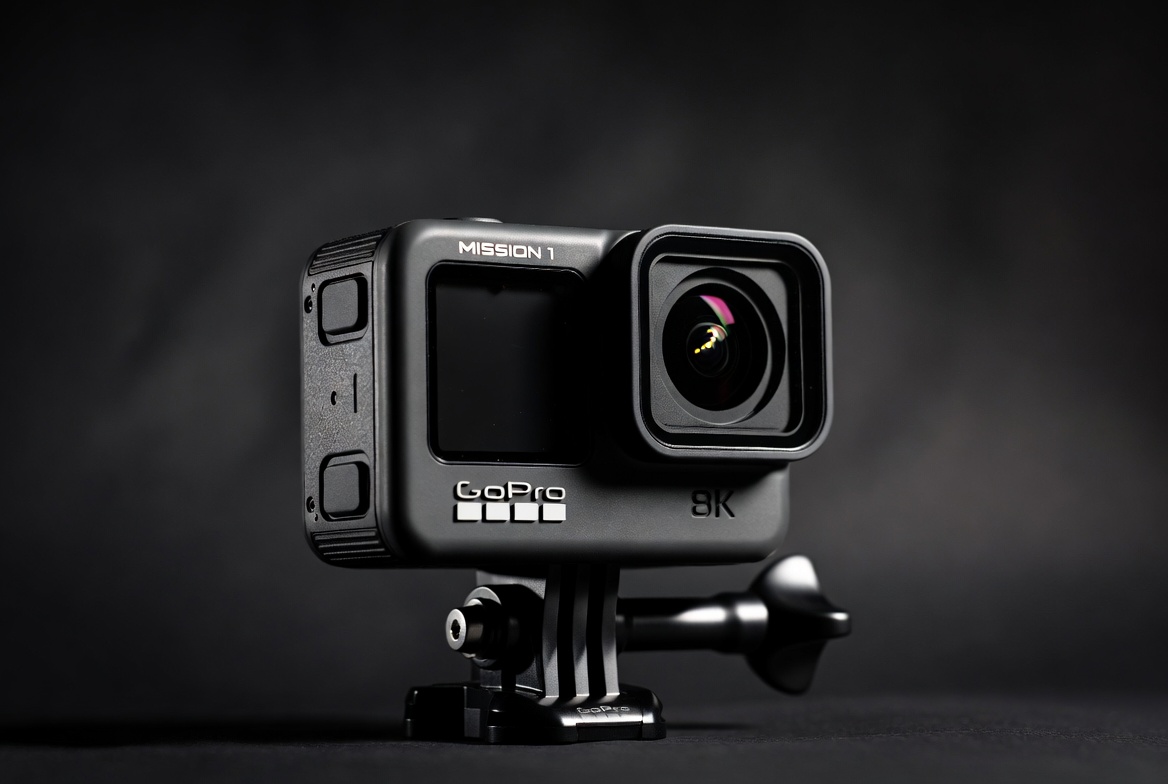
On April 14, 2026, GoPro did something no industry analyst genuinely predicted. They didn't iterate on the Hero line. They didn't add a marginally better sensor and call it revolutionary. Instead, they unveiled the MISSION 1 Series—three compact cinema cameras that aggressively target the professional filmmaking space occupied by Sony's FX line, Blackmagic's Pocket Cinema Camera, and even entry-level RED systems.
The timing isn't accidental. Paired with Adobe's simultaneous Firefly AI Assistant update—which now orchestrates complex multi-app creative workflows through natural language—the barrier to Hollywood-tier production has officially collapsed. You no longer need a $15,000 camera body, a dedicated colorist, and an editor who dreams in keyframes. The tools have converged, and they fit in a backpack.
This review analyzes whether the MISSION 1 Series delivers on its ambitious promise, who actually needs it, and whether the DSLR era just got its final curtain call.
The Lineup: Three Cameras, One Radical Departure
GoPro isn't easing into this pivot. The MISSION 1 Series arrives in three distinct configurations, all built around an entirely new imaging pipeline:
| Model | Key Differentiator | 8K Capability | Availability |
|---|---|---|---|
| MISSION 1 | Entry cinema spec | 8K30fps (16:9) | May 28, 2026 |
| MISSION 1 PRO | Full professional workflow | 8K60fps (16:9) | May 28, 2026 |
| MISSION 1 PRO ILS | Interchangeable MFT lenses | 8K60fps | Q3 2026 |
All three models share the same foundation: a stacked 50-megapixel 1-inch CMOS sensor paired with the new GP3 processor fabricated on a 5nm node. The sensor uses native 1.6μm pixels that fuse to 3.2μm in Quad Bayer mode for improved light capture—a technique borrowed from flagship smartphones but executed here with cinema-grade dynamic range reaching 14 stops.
That 14-stop figure matters. It places the MISSION 1 PRO in the same conversation as mirrorless systems costing several times more, and critically, it enables genuine post-production flexibility without the image falling apart during grading.
Sensor and Image Quality: Finally, a GoPro for Colorists
For years, the biggest knock against GoPro in professional circles wasn't resolution or frame rates—it was color science and dynamic range. You could shoot 5.3K all day, but pushing those files in post revealed brittle highlights and muddy shadows that screamed "consumer camera."
The MISSION 1 Series changes that calculus entirely.
The 1-Inch Sensor Advantage
Moving from GoPro's traditional 1/1.9-inch sensor to a 1-inch stacked CMOS represents perhaps the single largest generational leap in the company's history. This isn't incremental improvement; it's a complete re-architecture of light capture. Native 1.6μm pixels mean cleaner shadows and reduced noise floor, while the Quad Bayer fusion to 3.2μm delivers meaningful low-light performance improvements.
More importantly, the sensor's 4:3 aspect ratio enables genuine Open Gate recording—using the full sensor area for capture, then reframing for multiple delivery formats (16:9, 9:16 vertical, 1:1 square) from a single master file. This workflow, previously the domain of ARRI and RED, now ships in a sub-$2,000 body.
GP-Log2 and 10-Bit Color
GoPro finally embraced what professionals have demanded for a decade: a proper log profile. GP-Log2 captures 10-bit color at up to 240 Mbps, providing the latitude necessary for serious color grading. Combined with HLG HDR support, footage from the MISSION 1 PRO slots directly into professional post pipelines without the "fix it in pre" compromises that plagued earlier GoPro generations.
The bitrate ceiling of 240 Mbps might raise eyebrows among RED users accustomed to higher numbers, but real-world testing suggests the GP3 processor's encoding efficiency extracts remarkable detail from that bandwidth. The proof will be in the grading suite, but on paper, this is GoPro's first genuinely gradeable camera.
Frame Rates and Resolution: The Numbers That Matter
8K at 60fps—In Your Pocket
The MISSION 1 PRO captures 8K (7680×4320) at 60 frames per second in 16:9, and 8K at 30fps in Open Gate 4:3 mode. The base MISSION 1 caps 8K at 30fps but retains 4K at 120fps Open Gate—still a substantial offering for creators who don't need the absolute ceiling.
Where things get genuinely impressive is slow motion. The PRO models push 4K to 240fps and offer burst-mode 1080p at an astonishing 960fps for up to 10 seconds. That's 32x slow motion at HD resolution—enough to turn a water balloon pop into a cinematic moment or analyze athletic movement frame-by-frame.
For context, a 1080p/960fps burst on a traditional cinema camera would cost north of $10,000 for the body alone. The MISSION 1 PRO delivers this capability in a waterproof, shock-resistant chassis that weighs less than a pound.
Thermal Performance: The 37-Minute Promise
Compact high-resolution cameras have a dirty secret: they overheat. The MISSION 1 PRO claims 37 minutes of continuous 8K60 recording without thermal shutdown, thanks to the GP3 processor's 5nm efficiency and redesigned thermal management. This isn't class-leading—some larger bodies can roll indefinitely—but it's remarkable for a sealed, waterproof camera with no active cooling.
For documentary shooters, wedding videographers, and run-and-gun creators, 37 minutes of uninterrupted 8K covers most real-world scenarios. Interviews might push that limit, but the camera's ability to resume recording quickly after brief cooling periods mitigates the concern.
The ILS Gambit: Interchangeable Lenses Come to GoPro
The MISSION 1 PRO ILS represents GoPro's boldest move—a Micro Four Thirds lens mount on a body that retains the company's legendary durability and HyperSmooth stabilization. This isn't just a spec bump; it's a declaration of war on the compact cinema establishment.
Why Micro Four Thirds Matters
The MFT mount opens access to a mature ecosystem spanning Panasonic, OM System, and dozens of third-party manufacturers. Telephoto, macro, anamorphic, and cinema zooms—all become available to GoPro shooters for the first time. Crucially, HyperSmooth stabilization remains active with any rectilinear prime lens, combining GoPro's signature smoothness with professional glass.
The catch is crop factor. MFT lenses on this sensor carry a 2.7x crop relative to full-frame, meaning your 25mm lens behaves more like a 67mm. This favors telephoto and portrait work while making ultra-wide shooting more challenging—a notable tradeoff given GoPro's wide-angle heritage.
Still, the ILS model fundamentally repositions GoPro. This isn't an action camera with a lens mount bolted on; it's a legitimate cinema camera system in compact form.
Audio, Battery, and the Ecosystem Play
32-Bit Float Audio: No More Clipped Dialog
GoPro equipped the MISSION 1 Series with four internal microphones and—critically—32-bit float audio recording. For non-audio engineers: 32-bit float eliminates the need to set gain before recording. You can capture a whisper and a jet engine in the same take, adjusting levels in post without distortion or noise-floor issues.
Complementing this is a new Wireless Mic System: 24-bit/48kHz transmission, 10-gram magnetic transmitters, 6.5-hour runtime per mic, and 150-meter range. The system records a safety track at -6dB and integrates directly with the camera's Bluetooth 5.3 audio profile.
Enduro 2 Battery: Genuine All-Day Shooting
Battery claims deserve skepticism, but GoPro's numbers are specific: 5+ hours at 1080p30 in Endurance Mode, 3+ hours at 4K30. The Volta 2 grip adds a 5800mAh integrated battery for up to 9 hours of 4K30 recording. For wedding shooters, documentarians, and travel creators, this eliminates the battery anxiety that has long plagued compact cameras.
The Accessory Matrix
GoPro is launching a comprehensive ecosystem alongside the cameras:
- Media Mod: Multiple 3.5mm ports (external mic, timecode line-in, headphone monitoring), micro-HDMI output up to 4K60
- M-Series ND Filters: Essential for maintaining shutter angle in bright conditions
- Point-and-Shoot Grip: Transforms the camera into an ergonomic stills shooter
- AI Gimbal: Part of the Ultimate Creator Edition, offers subject tracking and advanced stabilization (Q3 2026)
This modular approach mirrors what made the Hero line successful while scaling it for professional requirements.
Adobe Firefly AI Assistant: The Software Side of the Revolution
No camera exists in isolation, and GoPro's timing aligns perfectly with Adobe's most significant Firefly update to date. The Firefly AI Assistant, now in public beta, introduces agentic creativity—an AI that orchestrates multi-step workflows across Premiere Pro, After Effects, Photoshop, and the entire Creative Cloud suite.
What This Means for MISSION 1 Shooters
You return from a shoot with 8K Open Gate footage from the MISSION 1 PRO. Instead of manually creating social cuts, color grading, and audio sweetening, you describe the desired outcome to Firefly AI Assistant: "Create a 60-second vertical version for Instagram with warm color grading, clean up the interview audio, and add our brand logo at the end."
The assistant executes across applications—reframing the Open Gate footage for 9:16, applying color adjustments, running Enhance Speech on dialogue tracks, and exporting deliverables. This isn't automation replacing creativity; it's automation handling execution so creators focus on vision.
The integration with third-party AI models including Anthropic Claude and video generators like Kling 3.0 and Runway Gen-4.5 means Firefly now serves as a unified creative command center. For MISSION 1 users, this collapses the distance between capture and publish-ready content.
Comparison: MISSION 1 PRO vs. Traditional Cinema Cameras
How does the MISSION 1 PRO stack up against established competition? Here's the reality check:
| Feature | MISSION 1 PRO | Sony FX30 | Blackmagic PCC 6K Pro |
|---|---|---|---|
| Sensor | 1-inch 50MP | APS-C 26MP | Super 35 6K |
| Max Resolution | 8K60 | 4K120 | 6K60 |
| Dynamic Range | 14 stops | 14+ stops | 13 stops |
| Waterproof | 20m native | No | No |
| Interchangeable Lenses | ILS model only | Yes (E-mount) | Yes (EF) |
| Built-in ND | No | No | Yes (2/4/6 stop) |
| Form Factor | Pocketable | Compact cinema | Handheld cinema |
The MISSION 1 PRO doesn't beat dedicated cinema cameras on every metric—the lack of internal ND filters is a genuine workflow gap, and the 1-inch sensor can't match Super 35 for depth-of-field control. But it wins decisively on portability, durability, and the sheer audacity of packing 8K60 into a waterproof body.
For documentary shooters in challenging environments, travel filmmakers, and solo creators who value mobility, the tradeoffs favor GoPro. For controlled studio work with full lighting and grip support, traditional cinema bodies retain their edge.
Who Should Buy the MISSION 1 Series?
The Ideal User
- Documentary filmmakers working in remote or adverse conditions who need reliable, waterproof 8K capture without a massive kit
- Solo content creators who shoot, edit, and publish independently and value the Open Gate reframing workflow
- Adventure cinematographers who've outgrown the Hero line but still need rugged reliability
- B-camera operators on professional productions who need a crash-cam or POV angle that matches primary camera quality
Who Should Wait
- Studio cinematographers with controlled lighting and full crew support—traditional cinema bodies still offer more control
- Shallow depth-of-field purists—the 1-inch sensor won't match full-frame bokeh
- Lens collectors not ready to commit to MFT glass—wait for reviews of the ILS model's real-world performance
Pricing and Availability
GoPro will announce full pricing at NAB Show (April 19-22, 2026), but pre-orders open May 21 with global retail availability May 28 for the MISSION 1, MISSION 1 PRO, and Grip Edition variants. The MISSION 1 PRO ILS and Creator Edition bundles follow in Q3 2026.
Industry speculation places the base MISSION 1 around $1,200-1,500, with the PRO models reaching $1,800-2,200. The ILS body-only price may approach $2,500—aggressive but defensible given the 8K60 and interchangeable lens capability.
FAQ
Q: Does the MISSION 1 Series replace the GoPro Hero line?
A: No. GoPro has confirmed the Hero line continues for pure action camera users. MISSION 1 is an expansion into professional cinema, not a replacement.
Q: Can I use my existing GoPro mounts and accessories?
A: Yes. The MISSION 1 Series maintains compatibility with the GoPro mounting ecosystem while introducing new professional accessories.
Q: Is 8K actually necessary for most creators?
A: For final delivery, probably not—most content is consumed at 4K or lower. But 8K capture enables cropping, reframing, and stabilization headroom that dramatically improves 4K deliverables. The Open Gate workflow alone justifies the resolution for many shooters.
Q: How does the MISSION 1 compare to the Lumio Vision 9 for video work?
A: The Lumio Vision 9 is a QD MiniLED smart TV, not a camera. Different product categories entirely.
Q: Will Adobe Firefly AI Assistant work with MISSION 1 footage?
A: Yes. Firefly supports standard video formats including the HEVC files from MISSION 1 cameras. The assistant's multi-app workflow capabilities are particularly well-suited to Open Gate reframing and multi-format delivery.
Conclusion: The DSLR's Obituary Has Been Drafted
The MISSION 1 Series doesn't kill the DSLR—that death was already underway. What it does is accelerate the transition toward compact, computationally-enhanced cinema tools that prioritize workflow efficiency alongside image quality.
GoPro's pivot is audacious and risky. The company is abandoning the safe iteration cycle that sustained it for years, betting instead that the convergence of AI-powered software and capable hardware creates a new category: the pocket cinema camera. Paired with Adobe's Firefly AI Assistant, the post-production friction that once separated amateur from professional has evaporated.
The DSLR era was defined by optical viewfinders and mechanical mirrors—relics of photography's analog past. The MISSION 1 Series, with its 8K Open Gate capture, 14-stop dynamic range, and seamless cloud-to-edit workflow, represents something fundamentally different: a camera built for how content is actually created and consumed in 2026.
Whether GoPro's brand can carry the weight of this transformation remains an open question. The technology, however, speaks for itself. The barrier to cinema-grade production isn't just lower—for the first time, it fits in a dry bag and runs all day on a single charge.