Introduction: The Strait That Holds the World Hostage
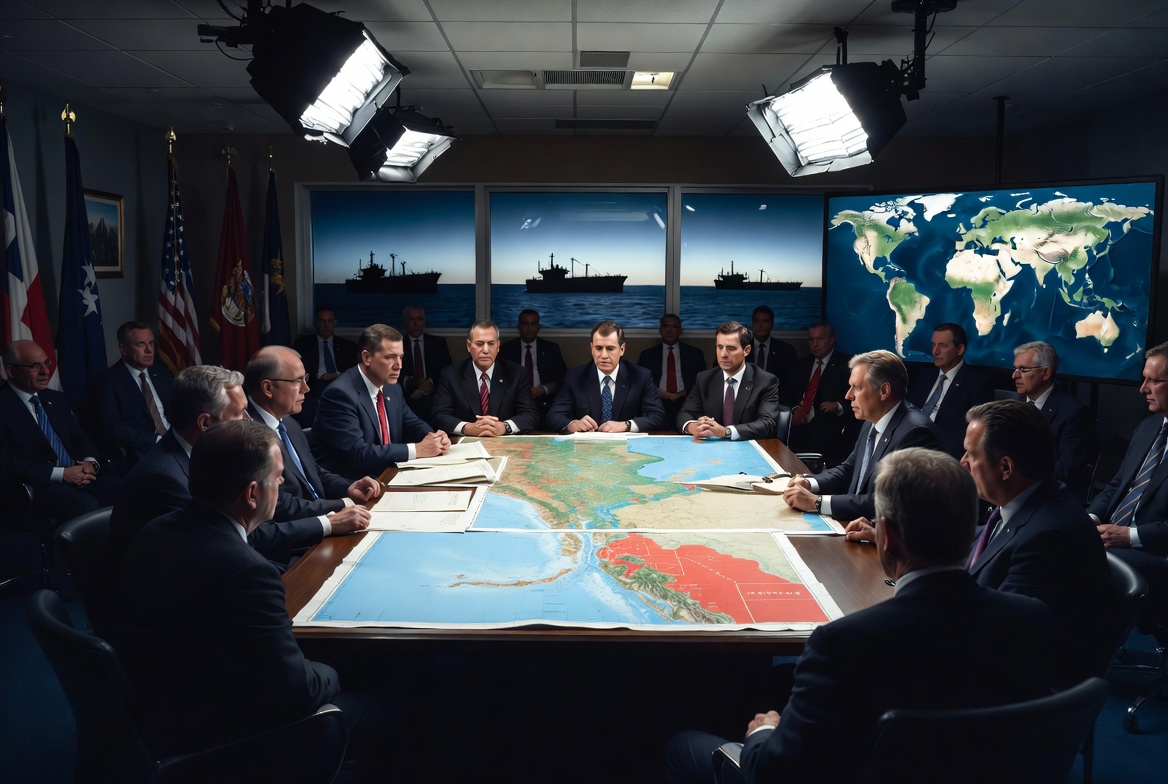
On Saturday morning, April 18, 2026, President Donald Trump walked into the White House Situation Room facing a crisis that energy analysts are already calling "the greatest global energy security threat in history."
Just 24 hours earlier, oil markets had breathed a collective sigh of relief. Iran had reopened the Strait of Hormuz, crude prices tumbled 9.1% to $90.38 per barrel, and Trump told reporters a deal was "within a day or two." The crisis appeared to be ending.
Then everything reversed.
Iran announced it was re-closing the strategic waterway. Revolutionary Guard gunboats opened fire on commercial tankers. And the President who claimed there were "no sticking points at all" with Tehran found himself back in the Situation Room, facing a ceasefire set to expire in just three days.
This isn't just another Middle East flare-up. The Strait of Hormuz handles roughly one-fifth of the world's crude oil and petroleum products. Its effective closure has already slashed global seaborne crude transport by approximately 760 million barrels per day—a 16% collapse in global supply. Food production is threatened by fertilizer shortages. Semiconductor manufacturing faces helium disruptions. And in Ireland, fuel protests nearly brought the country to a standstill last week.
What happens in the next 72 hours will determine whether the global economy faces a recession—or something far worse.
The Situation Room: Who Was There and What Was Discussed
The Saturday morning meeting brought together the most powerful national security officials in the Trump administration:
- Vice President JD Vance – expected to lead the next round of negotiations with Iran
- Secretary of State Marco Rubio – managing the diplomatic track through Pakistani intermediaries
- Defense Secretary Pete Hegseth – overseeing US naval assets positioned near the strait
- Treasury Secretary Scott Bessent – monitoring economic and sanctions implications
- White House Chief of Staff Susie Wiles
- White House envoy Steve Witkoff
- CIA Director John Ratliffe
- Joint Chiefs Chairman Dan Caine
According to two US officials who spoke to Axios, the assessment was stark: unless there is a breakthrough in peace talks, "the war could reopen within days."
The immediate trigger for Iran's reversal was Washington's refusal to end its naval blockade of Iranian ports—a condition Tehran now insists is non-negotiable. "The United States, with its track record of frequent breaking of its promises, is still continuing its banditry and piracy under the so-called title of naval blockade," said Ebrahim Zolfaghari, spokesman for Iran's Khatam al-Anbiya Central Headquarters.
From Tehran's perspective, this is about leverage. From Washington's, it's about not rewarding what Trump called "blackmail."
Timeline of Chaos: How We Got Here
February 28, 2026 – The US and Israel launch a joint offensive on Iran. Tehran retaliates with strikes on Israel and regional countries hosting US assets. Iran begins restricting Strait of Hormuz traffic.
Early March – Maritime traffic through the strait collapses from 129 ships per day to just 4—a 97% decline. Crude oil prices surge toward $120 per barrel.
April 8 – Pakistan brokers a two-week ceasefire. Iran agrees to allow commercial shipping through the strait for the truce duration.
April 11-13 – Pakistan Army Chief Asim Munir hosts US-Iran mediation talks in Islamabad. American officials present "new proposals" that Iran says it is reviewing.
April 17 – Oil prices tumble as markets price out geopolitical risk. Brent crude settles at $90.38, down 9.1%. Trump claims deal is imminent.
April 18 (Morning) – Iran announces re-closure of the strait, citing continued US blockade. IRGC warns: "Approaching the strait of Hormuz will be considered cooperation with the enemy, and any offending vessel will be targeted."
April 18 (Afternoon) – UK Maritime Trade Operations reports three separate incidents: Iranian gunboats fire on a tanker, an unknown projectile hits a container vessel damaging cargo, and a cruise ship reports a splash in close proximity.
April 18 (Evening) – Trump leaves the White House to play golf.
That last detail has drawn sharp criticism. Critics question the optics of departing for the golf course hours after convening an emergency national security meeting. Supporters argue the President is maintaining normalcy to avoid spooking markets further.
The Economic Fallout: Numbers That Should Scare Everyone
The Strait of Hormuz isn't just a geopolitical chokepoint—it's the global economy's single point of failure. The numbers tell a frightening story:
| Commodity | Share of Global Seaborne Trade |
|---|---|
| Crude Oil | 38% |
| Liquefied Petroleum Gas | 29% |
| Liquefied Natural Gas | 19% |
| Chemicals (including fertilizer) | 13% |
| Dry Bulk (including grains) | 2% |
The disruption has already reduced global seaborne crude transport by approximately 16%, or 760 million barrels per day below pre-crisis levels. Persian Gulf exports specifically have collapsed by roughly 1,270 million barrels per day, with alternative routes through UAE's eastern ports and Saudi Arabia's Red Sea terminal only partially offsetting the losses.
Fatih Birol, head of the International Energy Agency, warns this crisis "could dwarf the combined effects of the oil shocks of the 1970s." Those shocks triggered years of inflation, recessions, and fuel rationing across the developed world.
Beyond Oil: The Hidden Supply Chain Crisis
The economic damage extends far beyond gasoline prices:
- Jet fuel shortages threaten air travel just ahead of Europe's crucial summer tourism season
- Helium supplies—much of which originate in Qatar—face disruption, potentially halting semiconductor production
- Fertilizer shortages will damage food production and drive agricultural inflation
- Developing Asia faces potential GDP growth reductions exceeding 1% this year
Ireland has already experienced fuel protests severe enough to require military intervention to reopen highways and ports. The government announced €505 million in emergency fuel subsidies. France, with its history of fuel-price protests, is reportedly bracing for trouble ahead of next year's presidential election.
The Pakistan Connection: An Unlikely Mediator
One of the most intriguing subplots involves Pakistan's emergence as the primary mediator between Washington and Tehran. Pakistan Army Chief Asim Munir has personally hosted talks in Islamabad and Tehran, with Trump reportedly participating in at least one phone call with Munir and Iranian officials.
Pakistan's unique position stems from its relationships with both camps: a long-standing security partnership with the United States combined with geographic proximity and cultural ties to Iran. The two-week ceasefire that took effect April 8 was brokered through Pakistani channels, and efforts for another round of talks in Islamabad are reportedly underway.
However, the negotiations face structural challenges. Iran's Supreme National Security Council stated Saturday that it is still reviewing "new proposals" from the American delegation but has not yet responded. Meanwhile, Iran's parliament speaker Mohammad Bagher Ghalibaf revealed that a confrontation nearly escalated when he warned the American delegation that any movement by a US minesweeper "from its position, we would definitely fire at it."
The minesweeper backed down. But the incident illustrates how close the situation is to spiraling beyond diplomatic control.
What Iran Wants: Decoding Tehran's Strategy
Understanding Iran's calculus requires looking beyond the immediate blockade dispute. Analysis suggests Iran believes "time is on their side" and that "the longer the Strait of Hormuz is closed, the more the economic and political pressure on the US and its allies will mount."
Tehran's ultimate objective appears to be transforming temporary leverage into permanent strategic advantage. Before the US blockade was announced, many in the oil industry had already "quietly reconciled" themselves to Iran collecting tolls for passage through the strait—perhaps $1 per barrel.
Such an arrangement would fundamentally reshape Middle Eastern geopolitics. Iran would gain "a lucrative chokehold over the world's oil and gas supplies," generating revenue to rebuild proxy networks and nuclear infrastructure while positioning itself as a more extreme version of OPEC.
This explains why Washington views ending the blockade as unacceptable. Conceding Iranian control over the strait would represent a strategic defeat more consequential than any tactical military outcome.
The Military Reality: Why Force Won't Solve This
For those wondering why the US Navy doesn't simply force the strait open, military analysts offer sobering assessments:
Problem 1: Insurance Paralysis. Even if warships successfully transit the strait, commercial shipping requires insurance. A few drone or speedboat attacks would keep tanker traffic "all but uninsurable" regardless of naval presence.
Problem 2: Asymmetric Vulnerability. Iran doesn't need to sink tankers—it needs to create enough risk that shipping companies refuse the journey. A handful of attacks would achieve this.
Problem 3: Counter-Escalation. If the US escalates by targeting Iranian power plants and desalination facilities, Iran has threatened to strike similar infrastructure in the Gulf. Without desalination plants, "life in the UAE and Saudi Arabia would be pretty impossible."
The military option, in other words, leads toward regional devastation rather than resolution.
Global Reactions: Who's Taking Which Side
European Union: Facing the most immediate economic exposure, EU leaders have called for de-escalation while preparing contingency measures for fuel shortages.
China: As the destination for 84% of crude oil and 83% of LNG transiting the strait, Beijing has enormous stakes. Public statements have urged restraint while behind-the-scenes diplomacy continues.
Russia: The crisis has created opportunities for Russian energy exports. Washington renewed a sanctions waiver for Russian oil, acknowledging the need to maintain global supply.
Gulf States: Saudi Arabia and UAE find themselves in an impossible position—hosting US military assets while sharing a Gulf with an emboldened Iran. Their desalination dependency creates existential vulnerability.
What Happens Next: Three Scenarios for the Next 72 Hours
Scenario 1: Last-Minute Diplomacy (40% Probability)
Pakistan brokers an eleventh-hour extension. Iran agrees to keep the strait open for commercial traffic in exchange for US concessions on the naval blockade. Markets stabilize temporarily, but underlying tensions remain unresolved. The can gets kicked down the road.
Scenario 2: Limited Conflict (35% Probability)
Ceasefire expires without renewal. Iran escalates harassment of shipping while avoiding direct confrontation with US naval assets. Oil prices spike above $150 per barrel. Global economy tips into recession. Regional powers scramble to find alternative energy routes.
Scenario 3: Full-Scale Confrontation (25% Probability)
Miscalculation triggers direct US-Iran military engagement. Strait becomes active combat zone. Global energy markets freeze. The world economy faces its most severe crisis since World War II. This is the scenario everyone fears but no one can entirely rule out.
Conclusion: The Strait That Could Reshape the Century
The Strait of Hormuz crisis isn't just about oil prices or regional politics—it's about whether the post-Cold War global order can survive the pressures of the 2020s. A narrow waterway 21 miles wide at its narrowest point now holds the potential to trigger economic cascades that would reshape national budgets, corporate strategies, and individual livelihoods worldwide.
For Pakistan, the crisis offers both opportunity and peril. Success as mediator would elevate Islamabad's diplomatic standing considerably. Failure—or being seen as favoring one side—could damage relationships with both Washington and Tehran simultaneously.
For the global community, the lesson is unmistakable: energy security isn't just about drilling more oil. It's about having alternatives when chokepoints close, diversifying supply chains before crises hit, and maintaining diplomatic channels even with adversaries.
As President Trump's Situation Room meeting concluded without a breakthrough announcement, the world waits. Three days. That's all that remains before the ceasefire expires and the next chapter—whatever it brings—begins.