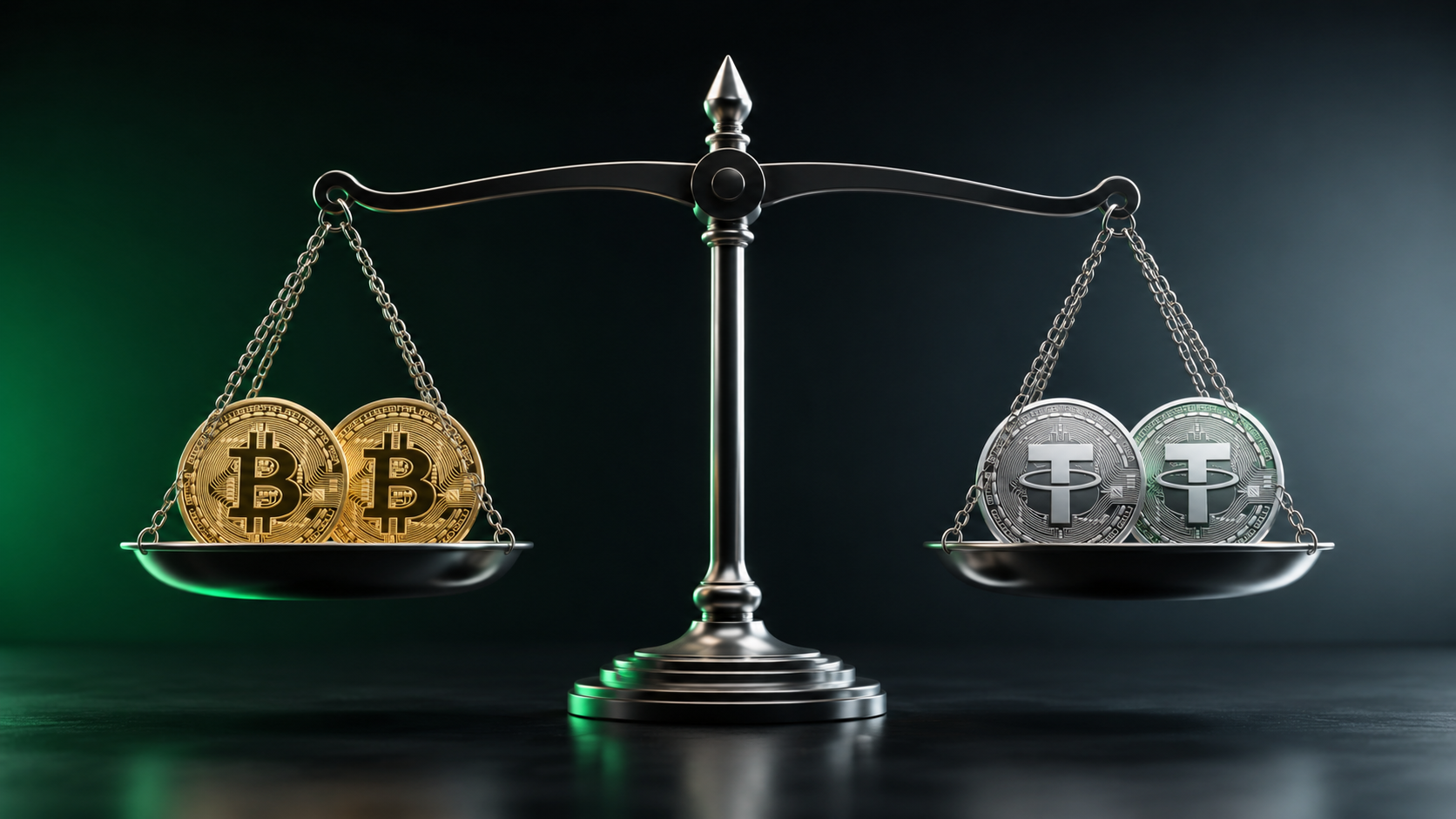
Why This Question Matters More in Pakistan Than Almost Anywhere Else
If you have been following the crypto space in Pakistan even casually, you have probably heard two names come up more than any others — Bitcoin and stablecoins like USDT. Your friend in Karachi swears by Bitcoin. Someone in a Telegram group says stablecoins are the only "safe" crypto. And you are sitting there wondering who is actually right. Here is the honest answer: both of them are. Just for different reasons, different goals, and different kinds of people.
In this article, I am going to break down the real difference between Bitcoin and stablecoins — not in textbook language, but in a way that makes sense for someone living in Pakistan, earning in rupees, watching inflation eat their savings, and trying to figure out where digital assets actually fit in their life.
Most crypto content online is written for Americans or Europeans. Their concerns are different. Their banking system works. Their currency does not lose 20-30% of its value in a single year. Pakistan is a different story. The Pakistani rupee has depreciated significantly over the past few years. Inflation has been running in double digits. Sending money abroad — or receiving it from abroad — comes with fees, delays, and red tape. And for millions of freelancers, remote workers, and small business owners, figuring out how to protect the money you earn is not just an investment question. It is a survival question. That is exactly why so many Pakistanis are turning to crypto. And that is exactly why understanding the difference between Bitcoin and stablecoins is so important.
What Is Bitcoin, Really?
You have heard the phrase "digital gold" thrown around a lot. And while it sounds like marketing, it actually captures something real about how Bitcoin works. Bitcoin has a fixed supply — there will only ever be 21 million coins in existence. No government can print more of it. No central bank can devalue it overnight. In a world where fiat currencies (including the rupee) can be inflated away, that hard cap is genuinely meaningful.
Bitcoin was created in 2009 by someone (or a group) using the name Satoshi Nakamoto. The idea was simple but radical: create a form of money that no single person, institution, or government controls. Every transaction is recorded on a public blockchain. No one can freeze your wallet. No one can reverse a confirmed transaction. Over the past decade, Bitcoin has gone from being worth less than a dollar to trading at tens of thousands of dollars per coin. Along the way, it has crashed by 80% multiple times — and then recovered to new highs. That story alone tells you everything you need to know about both its potential and its danger.
What Are Stablecoins, Really?
Stablecoins are a completely different beast. They are built to do one thing well: maintain a stable value. Most popular stablecoins like USDT (Tether) and USDC are pegged to the US dollar, meaning one USDT is always meant to equal one US dollar. They are not designed to make you rich. They are designed to not make you poor.
For a Pakistani, this has a very specific use case. If you convert your PKR into USDT, you have essentially locked your money into the dollar. Given that the rupee has historically lost value against the dollar over time, just holding USDT means your purchasing power is protected — at least in dollar terms. Stablecoins also make cross-border transactions incredibly easy. Sending $500 worth of USDT to someone in Dubai or the UK takes a few minutes and costs almost nothing in fees. Compare that to a bank wire — which can take 3 to 5 business days, cost $25 to $50 in fees, and require paperwork.
Bitcoin vs. Stablecoins: A Head-to-Head Comparison
Let me lay this out clearly so you can see exactly where each one wins and where it falls short.
Volatility
Bitcoin can gain or lose 15% of its value in a single day. In a bull market, this is exciting. In a bear market, it is painful. If you invested 100,000 rupees in Bitcoin at the wrong time, you could be sitting on 50,000 rupees worth a few months later. Stablecoins do not move. One USDT is one dollar today, tomorrow, and next month. For people who cannot afford to take that kind of risk — and in Pakistan, that is a lot of people — stablecoins offer something Bitcoin cannot: predictability.
Long-Term Growth
This is where Bitcoin clearly wins. Stablecoins will never "go up." That is literally the point of them. If you hold USDT for five years, you still have the same dollar value you started with (minus any interest if you are staking). Bitcoin, on the other hand, has historically rewarded long-term holders. People who bought and held through the 2018 crash, the 2020 crash, and the 2022 crash came out on the other side with significant gains. No guarantees — but the historical track record is hard to ignore.
Ease of Use for Transactions
For sending and receiving payments, stablecoins are the clear winner. Freelancers getting paid from abroad, families receiving remittances, small businesses paying international suppliers — stablecoins make all of this faster and cheaper. Bitcoin works for this too, but the volatility means both parties are taking a small gamble on the exchange rate.
Regulatory Risk in Pakistan
Both carry some regulatory uncertainty in Pakistan, but stablecoins arguably carry slightly less scrutiny because they are used heavily for P2P fiat transactions rather than speculative trading. That said, as Pakistan's regulatory framework develops under FATF pressure, both will likely come under clearer rules over time.
Who Controls It
Bitcoin is fully decentralized — no single entity controls it. Stablecoins are a mixed story. USDT is issued by Tether, a private company. USDC is issued by Circle. Both companies hold reserves backing the coins. This introduces a layer of counterparty risk that Bitcoin does not have. If Tether ever faced a run or insolvency, USDT could theoretically lose its peg.
Real-Life Scenarios: Which Makes Sense for You?
Let me walk through some situations that are genuinely common in Pakistan in 2026.
You are a freelancer who gets paid in dollars and worries about rupee conversion losses. In this case, stablecoins — particularly USDT — are your best friend. Convert your earnings to USDT and hold them there. Convert to PKR only when you actually need the money. This protects you from sudden rupee devaluations.
You want to invest for the next 5 to 10 years and can handle some risk. Bitcoin makes more sense here. Dollar-cost averaging — buying a fixed amount every week or month regardless of price — is the strategy most serious long-term holders use. It removes the pressure of trying to time the market.
You need to send money to a family member abroad or receive remittances. Stablecoins on a P2P platform work wonderfully for this. Lower fees than Western Union, Wise, or bank transfers. Usually faster too.
You have emergency savings you cannot afford to lose. Keep them in stablecoins, not Bitcoin. Emergency funds need to be reliable. Bitcoin is not reliable in the short term.
You are curious about crypto and want to start small. Start with stablecoins. Get comfortable with how wallets work, how P2P trading works, and how to send and receive crypto safely. Then, once you understand the mechanics, you can allocate a portion to Bitcoin if you want to.
The Combination Strategy Most Smart Pakistani Investors Use
Here is what experienced Pakistani crypto holders actually do, and it is not a either/or choice. They use stablecoins as their "base layer" — a digital dollar savings account. They keep most of their crypto holdings here. It is stable, it is accessible, and it protects against rupee depreciation. Then they allocate a smaller percentage — maybe 20 to 30 percent of their crypto budget — to Bitcoin as a long-term growth bet. This is money they are mentally prepared to leave untouched for years. Money they could handle losing without it affecting their daily life. This combination gives you the best of both worlds: protection and growth potential.
Common Mistakes Pakistani Crypto Beginners Make
Putting everything into Bitcoin during a bull run. When Bitcoin is surging, it is tempting to go all in. But those same periods are often when corrections are closest. Buy with discipline, not with excitement.
Assuming USDT is completely risk-free. Stablecoins are far less volatile than Bitcoin, but they are not zero-risk. Holding crypto always involves some level of risk — from the exchange, from the issuer, from hacks, from your own device security.
Using unknown P2P sellers to save a few rupees. The biggest source of crypto losses in Pakistan is P2P scams. Fake payment screenshots, reversed bank transfers, impersonation. Always use verified traders with high completion rates and strong reviews. The small savings are never worth the risk.
Losing your seed phrase. Your seed phrase is the master key to your wallet. If you lose it and lose access to your device, your crypto is gone forever. Write it down on paper, store it somewhere physically safe, and never take a photo of it or store it on your phone.
A Word on the Regulatory Situation in 2026
Pakistan's crypto regulatory environment is still evolving. The State Bank of Pakistan and SECP are both actively working on frameworks, pushed in part by FATF compliance requirements. While nothing is fully formalized yet, the direction of travel seems to be toward regulation rather than outright prohibition. What this means practically: start keeping proper records of your transactions now. If tax obligations become clearer, you want to be in a compliant position. Use reputable platforms. Do not move large amounts through informal channels that could attract scrutiny. The Pakistanis who approach crypto responsibly today will be in the best position when the regulatory picture becomes clearer.
Final Thoughts
Bitcoin and stablecoins are not competing products. They serve genuinely different purposes, and understanding which one fits your situation is the most important first step you can take as a Pakistani crypto investor. If you are new to all of this, start with stablecoins. Learn how the ecosystem works. Get comfortable. Then, when you are ready to take on some long-term risk for potential reward, add Bitcoin to your strategy. And whatever you do — do not invest money you cannot afford to lose, do not trust strangers in Telegram groups promising guaranteed returns, and always control your own keys.
The crypto space in Pakistan is still young, still uncertain, and still full of both opportunity and danger. Navigate it with patience and knowledge, and it can genuinely improve your financial situation. Navigate it with greed or haste, and it will punish you for it. Stay informed, stay careful, and make decisions that actually make sense for your life.
Disclaimer: This article is for educational purposes only and does not constitute financial advice. Cryptocurrency investments carry significant risk. Always do your own research and consult a qualified financial advisor before making investment decisions.