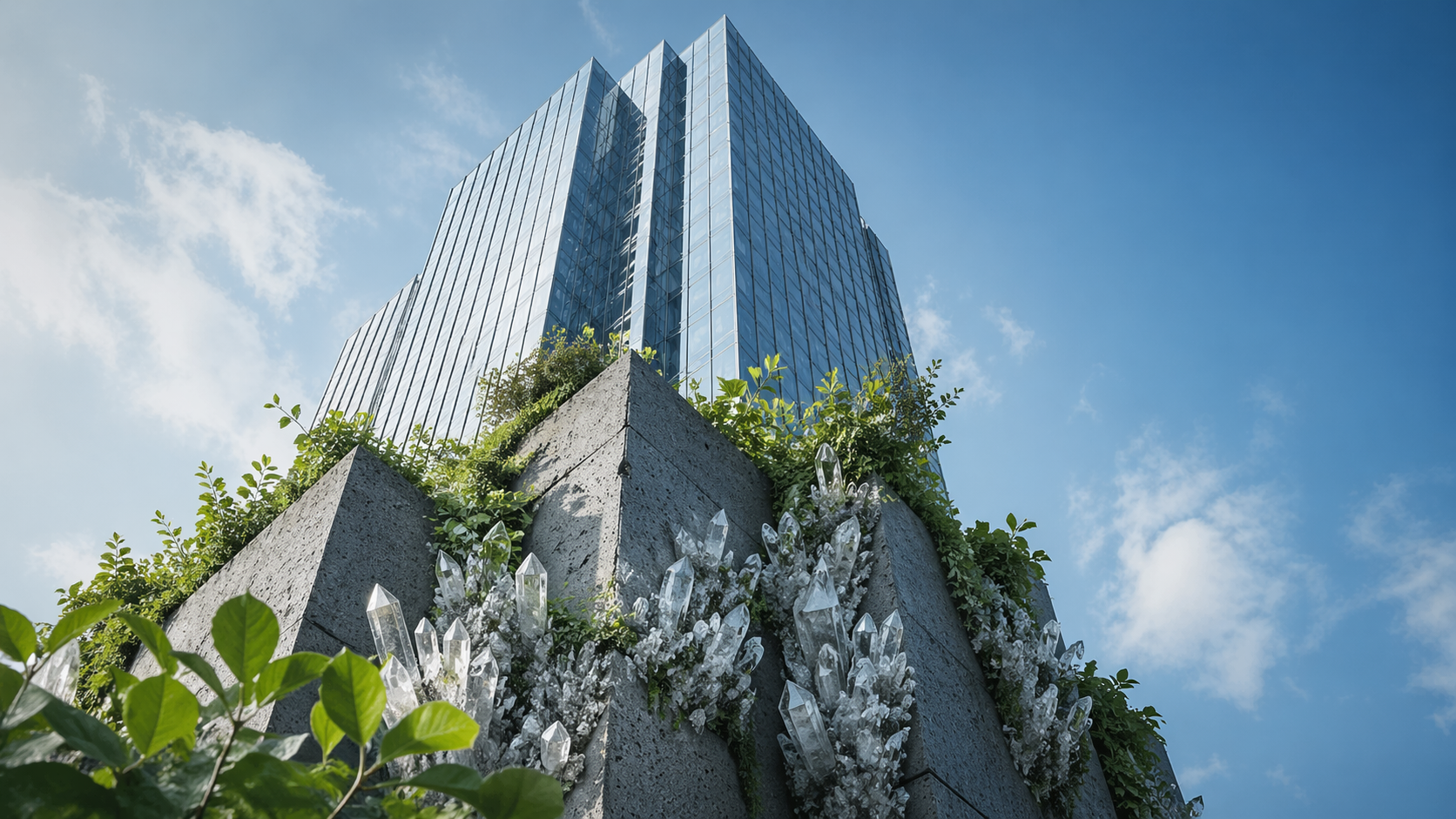
Introduction: The Building That Eats Carbon
Imagine a skyscraper that doesn't just reduce emissions—it actively removes carbon dioxide from the atmosphere. Not through expensive machinery or complex chemical plants. Through its very structure. This isn't science fiction. In 2026, carbon mineralization technology has transformed ordinary concrete from one of the world's largest carbon emitters into a permanent carbon sink. And the real estate industry is taking notice.
The numbers are staggering. Traditional cement production accounts for roughly 8% of global CO2 emissions. A single ton of cement releases nearly a ton of carbon dioxide. But inject captured CO2 into concrete during mixing, and that same material permanently mineralizes the carbon—locking it away for millennia. This is carbon mineralization at work. And it's finally scaling beyond pilot projects into mainstream commercial construction.
Table of Contents
- What Is Carbon Mineralization? The Simple Explanation
- Why 2026 Became the Tipping Point
- Real Projects Already Using Mineralized Concrete
- The Economics Finally Make Sense
- How Developers Are Monetizing Carbon-Negative Buildings
- Challenges Still Facing Widespread Adoption
- The Next Five Years: What to Expect
- Frequently Asked Questions
- Conclusion: Building a Carbon-Negative Future
What Is Carbon Mineralization? The Simple Explanation
Carbon mineralization sounds complex. The underlying chemistry is actually straightforward. When CO2 reacts with calcium or magnesium-rich minerals, it forms stable carbonates—essentially turning gas into rock. This process happens naturally over millions of years as mountains weather and erode. Scientists simply accelerated it.
In concrete applications, captured CO2 is injected into fresh concrete during mixing. The carbon dioxide reacts with calcium ions from cement to form calcium carbonate—limestone—the same material that makes up coral reefs and marble. This reaction happens in minutes rather than millennia. The resulting concrete is actually stronger than conventional mixes, requiring less cement to achieve the same structural performance.
The key insight: This isn't just reducing emissions. It's reversing them. Every cubic meter of mineralized concrete permanently stores approximately 15-25 kilograms of CO2 that would otherwise warm the atmosphere. At scale, the numbers become meaningful.
Why 2026 Became the Tipping Point
Three factors converged to make 2026 the year carbon mineralization broke into mainstream construction.
First, carbon credit markets matured. Verified, permanent carbon removal now commands premium pricing—$150-250 per ton for mineralization-based credits compared to $10-30 for temporary offsets. This revenue stream transforms the economics of low-carbon concrete from cost center to profit opportunity.
Second, building codes evolved. The International Building Code now recognizes mineralized concrete's superior performance characteristics. Several jurisdictions including California, New York, and the EU offer density bonuses or expedited permitting for projects demonstrating substantial embodied carbon reductions.
Third, corporate net-zero commitments reached their "show me" phase. Companies that pledged carbon neutrality by 2030 now face pressure to demonstrate actual progress. Their real estate portfolios—both owned and leased—represent some of the largest addressable emissions. Mineralized concrete provides verifiable, permanent reductions that satisfy increasingly skeptical stakeholders.
Real Projects Already Using Mineralized Concrete
The technology has moved beyond laboratory demonstrations into commercial projects across multiple continents.
One Manhattan West (New York): This 67-story office tower used 35,000 cubic yards of CarbonCure-treated concrete, permanently mineralizing approximately 540 tons of CO2—equivalent to the annual emissions of 120 passenger vehicles. The developer, Brookfield Properties, marketed the building's embodied carbon performance to secure premium tenants with their own sustainability commitments.
Vancouver House (Canada): This iconic twisting tower incorporated mineralized concrete throughout its structure, reducing embodied carbon by an estimated 12% compared to conventional construction. The project demonstrated that architectural ambition and carbon performance can coexist.
Heidelberg Materials Facility (Germany): The world's first industrial-scale carbon mineralization plant opened in 2025, producing 50,000 tons annually of carbon-negative aggregates for concrete production. This facility proves the technology scales beyond niche applications.
Dubai Creek Tower: The world's tallest structure-in-progress specified mineralized concrete for its foundation and core, projecting over 5,000 tons of permanent CO2 storage. The developer cited both environmental commitments and the material's superior durability in aggressive marine environments.
The Economics Finally Make Sense
For years, low-carbon concrete carried a "green premium"—costing 5-15% more than conventional mixes. That equation has flipped in 2026.
Carbon credit revenue now offsets 30-50% of the cost premium. Some projects achieve cost parity with conventional concrete before considering secondary benefits. Those secondary benefits compound the advantage: reduced cement content lowers material costs, improved strength allows structural optimization reducing total concrete volume, and faster curing accelerates construction schedules.
The real economic driver, however, is risk mitigation. Real estate investors increasingly price carbon risk into acquisition and financing decisions. Buildings with high embodied carbon face potential future taxation, regulation, or stranded asset status. Mineralized concrete provides insurance against these emerging liabilities.
Leading developers now view carbon-intensive concrete as a hidden liability and mineralized alternatives as competitive advantage.
How Developers Are Monetizing Carbon-Negative Buildings
Forward-thinking developers have moved beyond cost reduction into active revenue generation from carbon performance.
Premium Leasing: Tenants with their own net-zero commitments pay $2-5 per square foot premiums for space in verified low-carbon buildings. A 500,000 square foot office tower generates $1-2.5 million in additional annual rent.
Green Bond Financing: Projects meeting verified embodied carbon thresholds qualify for green bond issuance at 10-30 basis points lower interest rates. Over a 30-year financing term, this compounds to millions in savings.
Carbon Credit Sales: Some developers retain ownership of mineralization credits, selling them to buyers seeking permanent removal rather than temporary offsets. This creates ongoing revenue streams from completed construction projects.
Regulatory Credits: Jurisdictions with embodied carbon limits offer tradable compliance credits. Projects exceeding requirements generate credits sold to projects falling short.
Challenges Still Facing Widespread Adoption
Despite momentum, significant barriers remain before carbon mineralization becomes standard practice.
Supply Chain Maturity: CO2 capture and transport infrastructure remains concentrated in industrial regions. Projects in areas without nearby capture facilities face logistical costs that erode economic benefits. Expansion of CO2 pipeline networks and distributed capture solutions will determine deployment geography.
Verification Complexity: Proving permanent mineralization requires sophisticated monitoring and third-party verification. Methodologies exist but add cost and complexity compared to conventional construction documentation.
Workforce Training: Mineralized concrete requires modified mixing and placement procedures. Contractor familiarity remains limited outside early-adopter markets. Training infrastructure is expanding but not yet ubiquitous.
Legacy Specifications: Many project specifications still reference outdated standards that inadvertently exclude mineralized products. Updating these documents requires time and effort that slows adoption.
The Next Five Years: What to Expect
Several developments will accelerate mineralization adoption through 2030.
Direct Air Capture Integration: Companies like CarbonCure and Blue Planet are integrating direct air capture with concrete production, eliminating geographic constraints on CO2 sourcing. This enables mineralization anywhere concrete is produced.
Embodied Carbon Regulation: The EU's Carbon Border Adjustment Mechanism will extend to construction materials by 2027. U.S. federal procurement rules now favor low-embodied-carbon materials. These policies create durable demand signals.
Standardization: ASTM International is finalizing performance specifications for mineralized concrete, enabling specification by reference rather than proprietary approval. This removes a major friction point.
Cost Reduction: As production scales, learning curve effects continue reducing mineralization costs. Industry analysts project cost parity with conventional concrete across most markets by 2028.
Frequently Asked Questions
Q: Does mineralized concrete perform as well as conventional concrete?
A: Testing consistently shows mineralized concrete achieves equal or superior strength, durability, and workability compared to conventional mixes. The mineralization reaction actually densifies the concrete matrix, improving resistance to water penetration and chemical attack.
Q: How permanent is the carbon storage?
A: Geologically permanent. Calcium carbonate is stable under normal environmental conditions for millions of years. Unlike biological carbon storage (forests, soils), mineralization carries no reversal risk from fire, disease, or land-use change.
Q: Can existing concrete buildings benefit from this technology?
A: Mineralization occurs during initial mixing and curing. Existing concrete cannot be retroactively mineralized. However, crushed concrete from demolition can be mineralized during recycling into new aggregate.
Q: What's the premium for mineralized concrete in 2026?
A: 0-8% depending on project location, CO2 source proximity, and specification requirements. When carbon credit revenue is included, many projects achieve cost parity or better.
Q: How do I specify mineralized concrete for my project?
A: Request performance-based specifications rather than prescriptive mix designs. Engage suppliers early in design phases. Several industry organizations provide specification language and technical guidance.
Conclusion: Building a Carbon-Negative Future
Carbon mineralization represents something genuinely rare in climate technology—a solution that improves performance while reducing cost and emissions simultaneously. The real estate industry, historically slow to innovate, has recognized this convergence and is moving with surprising speed.
The buildings under construction today using mineralized concrete will stand for decades, permanently storing carbon throughout their operational lives. Every new project that adopts this technology expands the market, reduces costs for subsequent projects, and accelerates the transition toward genuinely carbon-negative construction.
The question for developers is no longer whether to adopt carbon mineralization, but how quickly. Early movers are already capturing premium tenants, securing favorable financing, and building reputational advantage. The laggards will face rising carbon costs, tenant pressure, and eventual obsolescence.
The future of real estate isn't just low-carbon. It's carbon-negative. And it's being built right now.