Introduction: The New Arms Race Runs on Sunlight
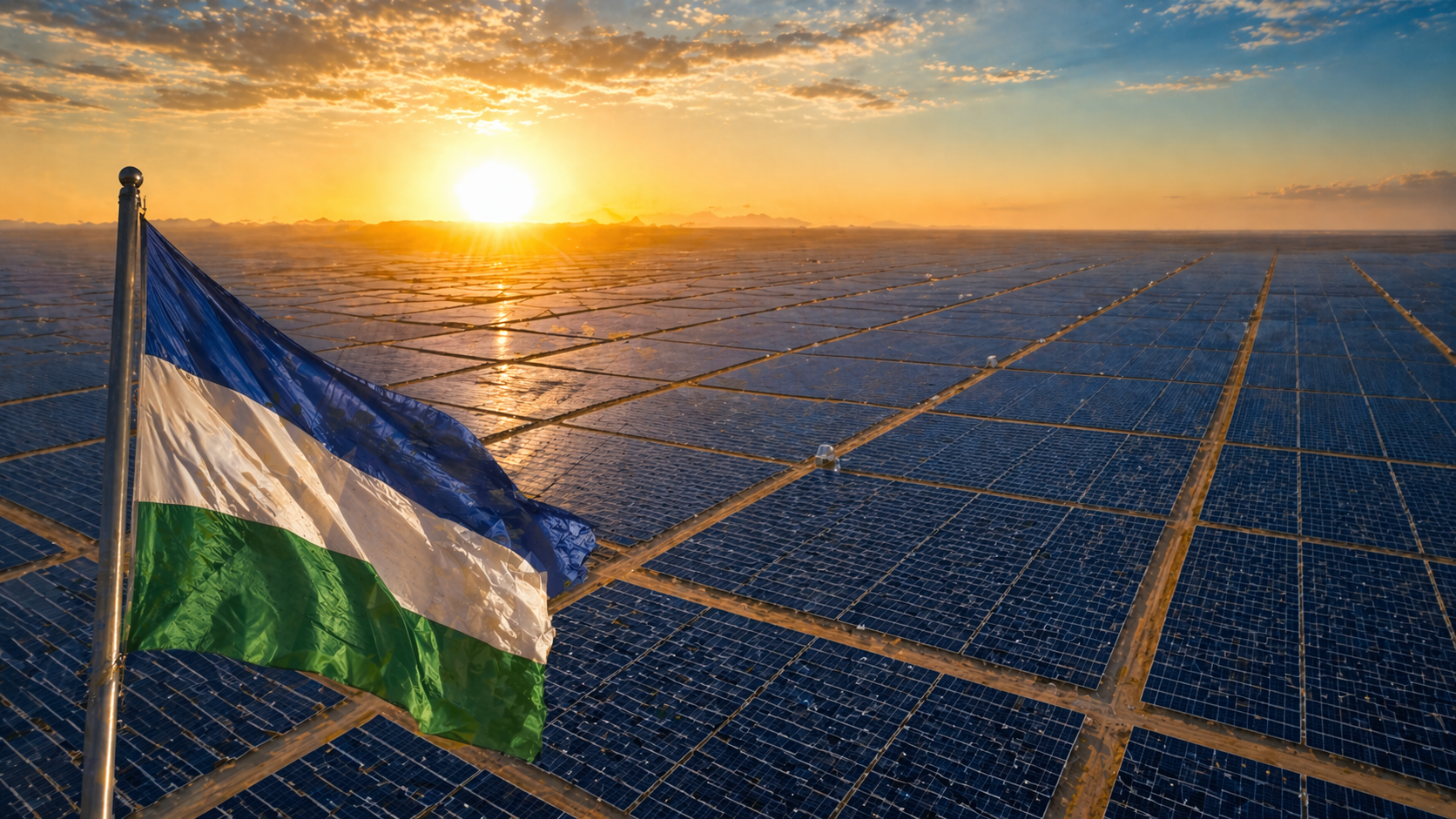
In the Gobi Desert, a solar farm visible from space now powers 6 million homes. In Saudi Arabia, robots clean 10 million panels daily across a facility the size of Singapore. In India, a single project spans 14,000 acres of former wasteland. This isn't environmental idealism. It's the new geopolitics of energy security. And 2026 has shattered every previous record for renewable deployment.
The numbers defy comprehension. Global solar installations in 2025 exceeded 500 gigawatts—more than the entire cumulative capacity installed before 2020. 2026 is tracking 40% higher. But the story isn't just about climate. It's about nations racing to free themselves from imported fuel dependencies that have shaped foreign policy for a century.
Table of Contents
- The Strategic Logic of Solar Independence
- Record-Breaking Projects Reshaping the Map
- Why 2026 Shattered Every Deployment Record
- The Battery Revolution Enabling 24/7 Solar
- Who Wins and Who Loses in the Solar Transition
- Challenges Scaling This Fast
- Frequently Asked Questions
- Conclusion: Energy Sovereignty Through Solar
The Strategic Logic of Solar Independence
Energy security has traditionally meant securing access to oil and gas—often through military presence, strategic alliances, or direct control of resources. Solar fundamentally rewrites this equation.
Sunlight cannot be embargoed. Solar panels, once installed, generate electricity for 25-30 years with minimal operational cost and zero fuel requirements. The geopolitical leverage that fossil fuel exporters wield disappears when importers can generate their own power domestically.
This explains why China, despite being the world's largest coal consumer, is also deploying solar faster than any nation in history. It explains why Saudi Arabia, sitting on the world's second-largest oil reserves, is building solar mega-farms at breakneck speed. It explains why European nations, traumatized by Russian gas weaponization, have accelerated renewable targets by a decade.
The strategic calculus is straightforward: Every gigawatt of solar reduces vulnerability to price shocks, supply disruptions, and geopolitical coercion.
Record-Breaking Projects Reshaping the Map
Several mega-projects completed or expanded in 2026 demonstrate the scale of this transformation.
China's Gobi Desert Complex: Already the world's largest solar installation at 8 gigawatts, expansion in 2026 pushed capacity to 12 gigawatts—enough to power Beijing during peak demand. The project combines solar with wind and battery storage, delivering reliable power to eastern population centers via ultra-high-voltage transmission lines.
Saudi Arabia's Sudair Solar Park: The kingdom's flagship renewable project reached full 3.3 gigawatt capacity in early 2026. Robotic cleaning systems maintain panel efficiency in harsh desert conditions. The project is part of Saudi Vision 2030's plan to generate 50% of electricity from renewables, preserving oil and gas for higher-value export rather than domestic combustion.
India's Bhadla Expansion: Already one of the world's largest solar parks, Bhadla added 2 gigawatts of capacity in 2026. The project transforms previously unusable desert land into productive energy assets, creating thousands of jobs in rural Rajasthan.
Australia's Sun Cable: The world's largest solar farm and battery storage facility began partial operations in 2026, eventually delivering 20 gigawatts of solar power to Darwin and via submarine cable to Singapore. The project demonstrates how solar can cross borders—creating energy export opportunities for sun-rich nations.
Morocco's Noor Complex: Expanded to 2.5 gigawatts of combined solar thermal and photovoltaic capacity. Unlike conventional solar, Noor's thermal storage enables power generation long after sunset, providing reliable baseload renewable power.
Why 2026 Shattered Every Deployment Record
Multiple factors converged to make 2026 the most significant year in solar history.
Cost Collapse: Solar module prices fell below $0.10 per watt for the first time, driven by massive Chinese manufacturing expansion and efficiency improvements. At these prices, solar is the cheapest electricity source in history across most of the world.
Policy Acceleration: The U.S. Inflation Reduction Act, EU Green Deal Industrial Plan, and similar policies globally created long-term investment certainty. Tax credits, production incentives, and streamlined permitting removed barriers that previously slowed deployment.
Energy Security Urgency: Russia's ongoing war in Ukraine and Middle East tensions reinforced the strategic value of domestic energy production. Governments accelerated timelines and removed bureaucratic obstacles.
Manufacturing Scale: Global solar manufacturing capacity reached 1,200 gigawatts annually—nearly triple deployment rates. This oversupply crushed prices while ensuring abundant availability.
The Battery Revolution Enabling 24/7 Solar
Solar's fundamental limitation—darkness—is being solved by parallel advances in energy storage.
Grid-scale battery installations grew 120% in 2025, with 2026 tracking similar growth. Lithium iron phosphate (LFP) batteries now cost under $80 per kilowatt-hour at utility scale. Sodium-ion batteries are entering commercial production at even lower costs.
The combination of cheap solar and cheap storage enables "firmed" renewable power—electricity available on demand regardless of weather or time. Several utilities now sign power purchase agreements for 24/7 renewable energy at prices competitive with new natural gas plants.
This changes solar from a daytime supplement into genuine baseload replacement.
Who Wins and Who Loses in the Solar Transition
The shift toward solar mega-farms creates clear winners and faces predictable opposition.
Winners: Sun-rich nations gain energy independence and potential export revenue. Manufacturing powerhouses capture global equipment demand. Technology companies providing efficiency optimization and grid management software thrive. Consumers benefit from declining electricity costs.
Transitioning: Traditional utilities must adapt business models from centralized fossil generation toward distributed renewables and grid services. Oil-exporting nations face declining long-term demand for their primary export.
Challenged: Coal mining regions experience continued employment decline. Natural gas plants face reduced utilization and stranded asset risk. Petro-states without economic diversification confront existential budget challenges.
The transition creates political tensions that smart policy must address—particularly supporting workers and communities dependent on declining industries.
Challenges Scaling This Fast
Breakneck deployment creates its own problems requiring urgent solutions.
Grid Integration: Transmission infrastructure lags generation deployment. Solar farms in remote deserts require expensive power lines to reach population centers. Permitting and construction timelines for transmission often exceed solar project development.
Land Use Conflicts: Mega-farms require substantial land area, creating tension with agriculture and conservation. Dual-use "agrivoltaic" projects combining solar with grazing or shade-tolerant crops offer partial solutions.
Supply Chain Concentration: China dominates solar manufacturing, processing over 80% of global polysilicon and producing over 75% of modules. Western nations are building domestic capacity but remain years from self-sufficiency.
Recycling Infrastructure: The first generation of solar panels is reaching end-of-life. Recycling capacity lags deployment, creating potential waste challenges that industry and regulators are racing to address.
Frequently Asked Questions
Q: Can solar really replace fossil fuels for baseload power?
A: Combined with storage, yes. Several regions including South Australia and California now regularly meet 100% of electricity demand from renewables for extended periods. As storage costs continue falling, 24/7 renewable power becomes economically viable across more regions.
Q: What happens when it's cloudy for multiple days?
A: Modern renewable grids combine solar with wind (which often complements solar production), battery storage (4-8 hours), longer-duration storage (pumped hydro, compressed air), and retained natural gas capacity for extreme events. No single technology provides reliability—the integrated system does.
Q: How long do solar panels last?
A: Modern panels carry 25-30 year performance warranties and typically operate beyond 35 years with gradual efficiency decline. Most continue producing 80%+ of original output after three decades.
Q: Are rare earth minerals required for solar panels?
A: No. Unlike wind turbines and electric vehicle motors, solar panels use abundant silicon, aluminum, glass, and copper. No rare earth elements are required for photovoltaic cells.
Q: Will solar continue getting cheaper?
A: The learning rate for solar—cost reduction per doubling of cumulative production—has held steady at 20-24% for four decades. Continued deployment at current rates should drive further cost reductions, though at slowing pace as manufacturing approaches theoretical efficiency limits.
Conclusion: Energy Sovereignty Through Solar
The mega-farms rising across deserts and plains represent more than climate action. They represent nations reclaiming energy sovereignty from global fuel markets. The countries deploying fastest will enjoy lower electricity costs, reduced import dependence, and insulation from geopolitical energy shocks.
This transition carries profound implications for global power dynamics. Nations that built wealth and influence on fossil fuel exports face fundamental economic restructuring. Nations that imported both fuel and insecurity gain new strategic autonomy.
The race for energy security through solar isn't just about electrons. It's about who holds power—literally and figuratively—in the decades ahead. And 2026 marks the year the transition became irreversible.
The sun never sets on energy independence. It just takes leadership to capture it.