First, the Good News — and It Is Genuinely Good
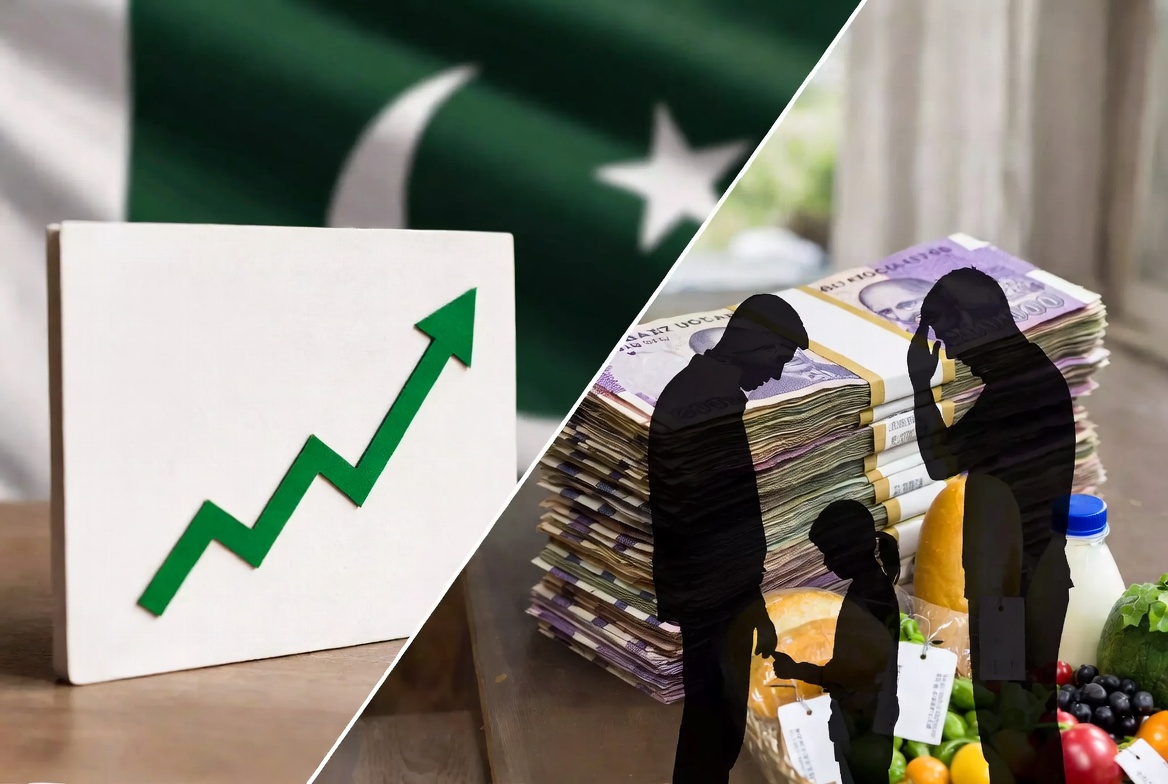
Turn on any news channel in Pakistan right now and you will hear two very different stories told at the same time. On one side, government ministers speak confidently about economic stabilization, falling inflation, record remittances, and a recovering rupee. On the other side, you have real people — in Karachi's markets, in Lahore's working-class neighborhoods, in the small shops of Multan and Peshawar — who will tell you that everything still feels expensive, still feels uncertain, still feels hard. Both of these stories are true. And understanding why they can both be true at the same time is the only way to make sense of where Pakistan actually stands in 2026.
This is not a government press release and it is not doom-scrolling pessimism either. This is an honest look at Pakistan's economic recovery — what is genuinely improving, what is still broken, and what it all means for the average Pakistani family trying to plan their life.
Let us start with what the data actually shows, because dismissing the progress entirely would be unfair and inaccurate. Pakistan's inflation rate, which peaked at a staggering 38 percent in May 2023, has come down significantly. As of early 2026, it is hovering around 10 to 11 percent. That is still high by any reasonable measure — nobody is celebrating 10 percent inflation — but the direction of travel matters enormously. Coming down from 38 percent to 11 percent in less than three years is a real achievement, even if your grocery bill does not feel like it reflects that.
The State Bank of Pakistan has been cutting interest rates steadily as inflation cooled. After keeping the policy rate at a historic high of 22 percent for over a year, the SBP has brought it down to around 12 percent in 2026. For businesses trying to borrow money to grow, this is meaningful relief. For ordinary people with loans or mortgages, lower rates ease the monthly burden. Foreign exchange reserves have stabilized. Pakistan went through a period in 2023 where reserves fell so low the country could barely cover three weeks of imports. That crisis has passed. The IMF's extended program, combined with inflows from Saudi Arabia, the UAE, and China, has rebuilt a buffer that gives the economy some breathing room.
Remittances from Pakistanis working abroad continue to be a lifeline. In the fiscal year ending June 2025, Pakistan received over 30 billion dollars in remittances — one of the highest figures in the country's history. This is real money flowing directly into Pakistani households, supporting consumption, keeping the rupee from collapsing, and funding imports. The IT sector is quietly becoming one of Pakistan's most important economic stories. Freelance and technology exports crossed 3 billion dollars and continue to grow. Young Pakistanis — sitting in apartments in Karachi, bedroom offices in Lahore, and shared workspaces in Islamabad — are earning in dollars, pounds, and euros, and they are doing it without needing a single factory or formal employer.
Now, the Honest Part
Here is what does not make it into the government press conferences. Even at 11 percent, inflation is compounding on top of years of previous inflation. The price of a kilo of tomatoes, a cylinder of cooking gas, a school uniform — these did not just go up 38 percent in one year and then come back down. Prices went up and largely stayed up. Families who adjusted their budgets during the worst of the crisis have not seen those adjustments reversed. They have simply learned to live with less.
Electricity bills remain a source of deep frustration and genuine hardship for millions of Pakistani households. The circular debt crisis in the power sector — a decades-old wound — was partly addressed through tariff increases passed on to consumers. The result is that electricity is now genuinely expensive in Pakistan, disproportionately affecting middle- and lower-income families who spend a larger share of their income on energy. Unemployment, particularly youth unemployment, remains stubbornly high. Pakistan adds roughly two million new young people to the workforce every year. The economy is not creating formal jobs at anywhere near that pace. The result is a growing population of educated, ambitious young Pakistanis working in the informal economy, freelancing without safety nets, or sitting idle — not because they lack talent but because the formal economy has no place for them yet.
The tax base remains dangerously narrow. Pakistan collects taxes from a tiny slice of its population and economy. The agriculture sector — which employs nearly 40 percent of the workforce — contributes very little in taxes. Real estate, historically a favored asset class for Pakistan's wealthy, has long enjoyed favorable tax treatment. This means the burden falls disproportionately on salaried workers and registered businesses, while vast wealth goes largely untaxed. The IMF has repeatedly pushed for broadening the tax base, and while some progress has been made, the political difficulty of taxing powerful sectors means change is slow.
What the IMF Deal Actually Means
In May 2026, the IMF approved another tranche of 1.32 billion dollars for Pakistan as part of its Extended Fund Facility program. This was good news for the government's balance sheet and helped steady the rupee. But it is worth understanding what the IMF program actually is and what it requires. The IMF does not give Pakistan free money. It provides loans at relatively low interest rates, but attached to those loans are conditions — structural reforms Pakistan must implement to demonstrate it is putting its fiscal house in order. These conditions include reducing subsidies, increasing tax collection, raising utility prices to cover costs, and controlling government spending.
Most of these reforms are economically necessary. Pakistan cannot indefinitely spend more than it earns and borrow the difference. But the short-term impact of many of these reforms falls on ordinary people. When the government reduces wheat or electricity subsidies to meet IMF conditions, it is poorer households that feel it most, because they spend the highest proportion of their income on food and energy. This is the fundamental tension in Pakistan's recovery story. The medicine that stabilizes the economy in the long run causes pain in the short run. And for a family already stretched thin, short-run pain is not an abstraction — it is a skipped meal, a child pulled from a private school, a medical appointment deferred.
The SIFC and Foreign Investment: Hope or Hype?
One of the government's flagship economic initiatives is the Special Investment Facilitation Council, or SIFC. Established to attract foreign investment — particularly from Gulf countries like Saudi Arabia, the UAE, Kuwait, and Qatar — the SIFC operates as a one-window facility cutting through Pakistan's notoriously tangled bureaucracy to make it easier for investors to set up and operate. On paper, the results look promising. Saudi Arabia has expressed interest in agricultural investments. The UAE has signed agreements around port development and logistics. There is genuine engagement happening at a level Pakistan has not always been able to attract.
But investment announcements and actual deployed capital are two different things. Pakistan has a long history of memoranda of understanding that never translate into ground-level projects, of investor enthusiasm that cools when confronted with the realities of doing business in the country — inconsistent policy, slow contract enforcement, energy costs, and security concerns in some regions. Whether the SIFC translates into real jobs and real economic activity over the next two to three years will tell us far more than any signed agreement does today.
What This Means for Your Daily Life
If you are an average Pakistani trying to figure out what all of this means practically, here is the ground-level reality. Your cost of living is not going to dramatically drop in the near future. Inflation is cooling, but that does not mean prices are going down — it means they are rising more slowly. Budgeting carefully remains essential. If you have a job in the formal sector with a fixed salary, you have likely seen your purchasing power eroded over the past few years and not fully recovered. Advocating for salary adjustments that keep pace with inflation is more important than ever.
If you are a young person entering the job market, the honest advice is to build skills that travel — technology, digital marketing, writing, design, data analysis. The formal job market is tight, but the global digital economy has genuine demand for talented Pakistanis willing to compete internationally. If you own a small business, lower interest rates are a genuine positive development. Borrowing to expand or invest in equipment is less punishing than it was a year ago. If you are planning any major purchase — a home, a car, a significant appliance — the relative stability of the rupee compared to 2023 gives you more predictability in planning, even if prices remain elevated.
Pakistan's Position in the Region
It is also worth stepping back and looking at Pakistan's economic situation in a regional context, because it changes the picture somewhat. Pakistan is not uniquely struggling. Sri Lanka faced a full economic collapse in 2022. Bangladesh has dealt with political upheaval and economic stress. Even India, despite its impressive headline growth numbers, has pockets of extreme poverty and unemployment that its GDP figures obscure.
Pakistan's recovery from its 2023 near-crisis has been faster than many analysts expected. The country did not default on its debt. The rupee stabilized. Inflation came down. These outcomes were not guaranteed — they required difficult decisions and, frankly, some help from friendly countries and international institutions. The question Pakistan faces now is whether it can use this period of relative stability to do the harder, deeper work: broadening the tax base, investing seriously in education and skills, building infrastructure, and creating the conditions for sustainable private-sector growth. Stability is not the destination. It is the precondition for doing the real work.
What Comes Next
The next twelve months will be telling. Pakistan's current IMF program runs through 2026, and negotiations for any follow-on arrangement will reveal how committed the government is to continued reform. Elections and political pressures always create temptation to ease up on painful measures — subsidies get restored, spending increases, fiscal discipline softens. Internationally, Pakistan's geopolitical position gives it unusual leverage. Its location between South Asia, Central Asia, and the Gulf makes it a critical transit corridor. Its role in regional stability — which made headlines through 2025 and into 2026 — has given it diplomatic capital it can potentially convert into economic partnerships.
None of this is guaranteed. Pakistan's economic history is full of moments where the country seemed to turn a corner, only to slip back into crisis. But it is also a country that has proven, repeatedly, that it is more resilient than outsiders expect. The recovery is real. It is incomplete. And what happens next depends not just on government policy but on millions of individual Pakistanis who keep working, keep building, keep adapting — because that is what they have always done.
This article is for informational purposes only. Economic data and figures cited reflect conditions as of May 2026 and may change. Always consult qualified financial advisors for personal financial decisions.