Executive Summary
Finance Minister Muhammad Aurangzeb presented Pakistan's federal Budget 2026-27 in the National Assembly on Friday, June 12, 2026 — today. Total outlay: approximately Rs17.5 trillion. FBR tax revenue target: Rs15.267 trillion. Salary increase of 10% expected for government employees. Income tax relief for the salaried class. BISP stipend raised. Defence allocation at Rs3 trillion. Debt servicing at Rs7.824 trillion. No new development schemes. This is the complete, honest breakdown of what was announced, what it means for your salary, your groceries, your taxes, and Pakistan's economy.
Introduction
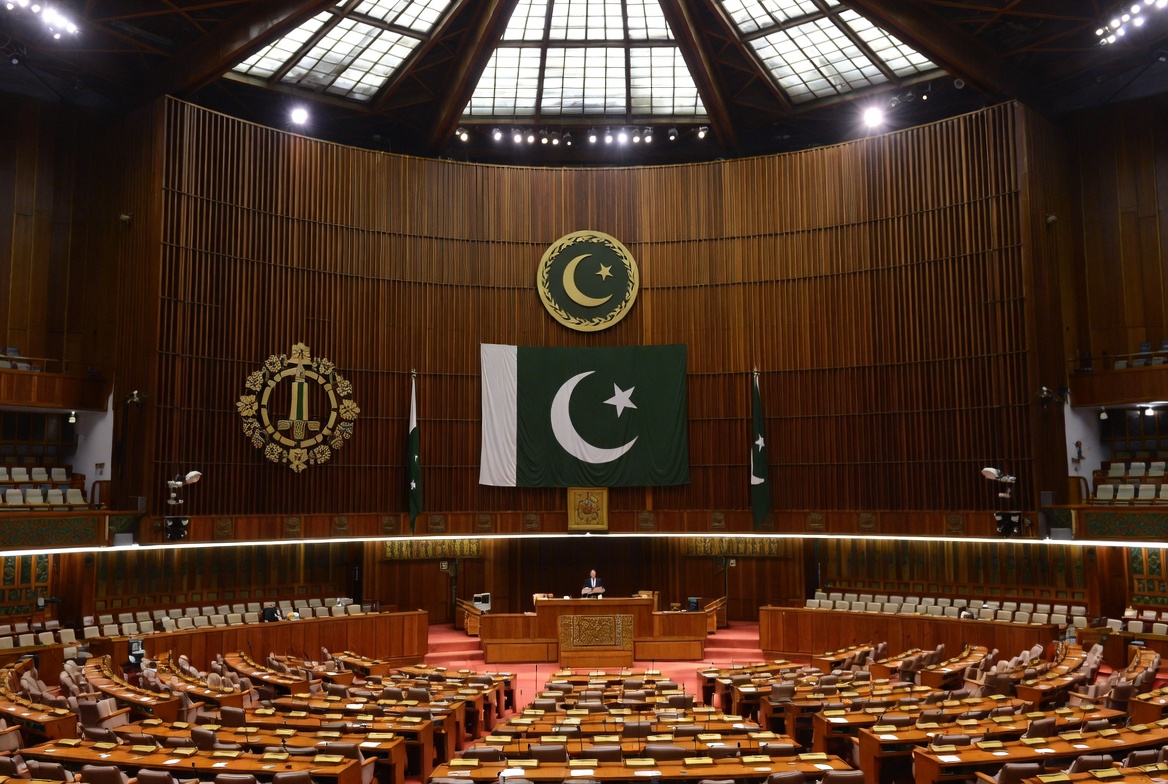
Every year, Pakistan stops for a few hours and watches a Finance Minister stand at a podium in the National Assembly and read out numbers that will shape the lives of 240 million people for the next twelve months.
This year the moment carried extra weight.
The Budget 2026-27 was delayed three times — originally set for June 5, then June 10, finally landing today, June 12. The delays were not administrative. They reflected the intense political negotiation that preceded the speech: coalition partners demanding concessions, provinces fighting over fiscal space, the International Monetary Fund watching from Geneva with specific structural benchmarks that could not be crossed without risking the country's bailout programme.
Finance Minister Muhammad Aurangzeb — the former banker who inherited Pakistan's most difficult fiscal terrain in decades — delivered the speech to a National Assembly chamber where the opposition decided not to boycott but promised protests. The numbers he announced were shaped by one overriding constraint: Pakistan cannot afford to be generous. Not with debt servicing consuming Rs7.824 trillion of the budget before a single rupee reaches a school, a hospital, or a government employee's salary.
Here is what was announced, what it means in plain language, and what it actually changes for ordinary Pakistanis.
Table of Contents
- The Budget at a Glance: Key Numbers
- What This Budget Means for Your Salary
- Income Tax Changes: Will You Pay Less?
- BISP and Social Protection: The Poor's Share
- Defence Allocation: Rs3 Trillion
- Debt Servicing: The Budget's Biggest Line Item
- FBR Tax Target: Can Pakistan Actually Collect Rs15.267 Trillion?
- Development Budget: What Gets Built This Year?
- What Gets Cheaper and What Gets More Expensive
- The IMF Dimension: How Much Freedom Did Pakistan Actually Have?
- The Economic Survey 2025-26: The Numbers Behind the Budget
- What the Opposition Is Saying
- What Experts Are Saying
- The Honest Assessment: Who Won and Who Lost in This Budget
- What Happens Next
- FAQ
Key Takeaways
- Total budget outlay: approximately Rs17.5 trillion for FY2026-27
- FBR tax revenue target: Rs15.267 trillion — the most ambitious collection target in Pakistan's history
- Salary increase of approximately 10% for government employees
- Income tax slabs expanded from six to eight categories, with relief for middle-income earners
- BISP quarterly stipend increased from Rs13,000 to Rs14,500
- Defence allocation: Rs3 trillion
- Debt servicing allocation: Rs7.824 trillion — consuming 45% of total outlay
- Development budget (PSDP): approximately Rs1 trillion — no new projects, completion of existing ones only
- Petroleum levy collection target: Rs1.727 trillion
- GDP growth target for FY2027: approximately 4.2%
- Per capita income rose to $1,901 in FY2026 from $1,751 the previous year
Quick Answer: What Does This Budget Change for Me?
Government employee: You will receive a 10% increase, likely as an ad hoc relief allowance on basic pay. Your income tax bill should fall modestly due to slab adjustments.
Private salaried worker: Income tax slabs have been revised with relief focused on those earning between Rs1.2 million and Rs2.2 million annually. Your net take-home pay may increase slightly.
BISP beneficiary: Your quarterly stipend rises from Rs13,000 to Rs14,500 — an increase of Rs1,500 per quarter.
Vehicle owner (above 2000cc): An Environmental Levy has been introduced — 10% on 2001cc–3000cc petrol/diesel vehicles, 19.5% on vehicles above 3000cc.
Small business / trader: The Fixed Tax Asaan Scheme is being expanded for shopkeepers and traders earning up to Rs200 million annually.
General consumer: Prices on some cosmetics and consumer products should fall. Luxury vehicles and high-engine-capacity cars will cost more.
The Budget at a Glance: Key Numbers
| Item | FY2026-27 Allocation/Target | Total Budget Outlay | ~Rs17.5 trillion | FBR Tax Revenue Target | Rs15.267 trillion | Debt Servicing | Rs7.824 trillion | Defence | Rs3 trillion | BISP/Social Protection | ~Rs838 billion | Pensions | Rs1.1 trillion+ | Development (PSDP) | ~Rs1 trillion | Petroleum Levy | Rs1.727 trillion | Export Target | $32.8 billion | Import Target | $70 billion | GDP Growth Target | ~4.2% |
|---|
Why This Budget Matters: The Context
Pakistan in June 2026 is a country in stabilisation — not recovery, but stabilisation. Inflation dropped from a peak of 38% in 2023 to 10.9% by April 2026, a genuine achievement. Foreign exchange reserves have stabilised. The IMF extended facility has held.
But the Economic Survey 2025-26, released yesterday by Finance Minister Aurangzeb, told a more complicated story. GDP grew at 3.7% in FY2026 — the highest in four years — but it missed the 4.2% target. Exports declined. Imports surged. The FBR missed its collection target. Public debt ballooned in absolute terms. Per capita income rose to $1,901, an improvement, but still far below regional peers.
Most critically: the Middle East energy crisis that followed the US-Iran war drove energy costs higher, squeezed industrial output, and pushed inflation back into double digits after months of decline. Pakistan's economy is more vulnerable to external shocks than any comparable developing economy, and 2025-26 demonstrated that vulnerability clearly.
The Budget 2026-27 was designed inside those constraints, with three masters to satisfy simultaneously: the IMF's fiscal framework, coalition political partners demanding visible relief, and 240 million citizens whose living standards have been compressed for three consecutive years.
It cannot fully satisfy all three. No budget can. The question is who got the most and who got the least.
What This Budget Means for Your Salary
Government Employees: 10% Ad Hoc Increase
The 10% salary increase for government employees was the most expected and most politically necessary announcement of the budget. With inflation running at 10.9% in April 2026, a 10% raise is technically a pay cut in real terms — it replaces exactly the purchasing power lost to inflation without providing any actual improvement in living standards.
This is the third consecutive year in which Pakistan's salary increases have tracked closely to or slightly below headline inflation. In FY2026, employees received a 10% increase along with a 30% Disparity Reduction Allowance on basic pay and a 7% pension increase. The FY2027 salary package is more modest.
The practical calculation for a government employee: if your basic pay is Rs40,000, a 10% increase adds Rs4,000 to your basic pay. If your basic pay is Rs80,000, you gain Rs8,000. These are gross figures before tax.
Pensioners
Pensions will be increased, with the pension allocation exceeding Rs1.1 trillion — a significant line item. The specific pension increase percentage will be confirmed in the Finance Bill, but sources suggest a 7–10% increase consistent with recent years.
Private Sector Salaried Workers
The budget does not directly set private sector salaries. However, the income tax changes announced today will affect the net take-home pay of every salaried Pakistani in the formal economy.
Income Tax Changes: Will You Pay Less?
The most significant change for working Pakistanis in this budget is not the salary increase — it is the revision of income tax slabs for salaried individuals.
Expanded Tax Slabs: From 6 to 8 Categories
The existing six-tier income tax structure for salaried individuals is being expanded to eight categories. This expansion creates more granular brackets that should reduce the "slab cliff" effect, where a modest salary increase pushes someone into a significantly higher tax rate.
Key Relief Zone: Rs1.2 Million – Rs2.2 Million
The most targeted relief is for individuals earning between Rs1.2 million and Rs2.2 million annually — roughly Rs100,000 to Rs183,000 per month. This bracket covers a large portion of Pakistan's formal private sector workforce: mid-level corporate employees, experienced teachers, junior doctors, and technical professionals.
Impact on Common Salary Levels
| Monthly Salary | Annual Income | FY2026 Tax (Approx) | FY2027 Tax (Expected) | Change | Rs50,000 | Rs600,000 | Rs0 | Rs0 | No change | Rs80,000 | Rs960,000 | Rs18,000 | Rs15,000–16,000 | Modest relief | Rs100,000 | Rs1,200,000 | Rs30,000 | Rs25,000–27,000 | Noticeable relief | Rs150,000 | Rs1,800,000 | Rs120,000 | Rs95,000–105,000 | Significant relief | Rs200,000 | Rs2,400,000 | Rs230,000 | Rs200,000–215,000 | Moderate relief |
|---|
*Figures are based on pre-budget confirmed proposals. Official Finance Bill numbers will be published at finance.gov.pk within 24 hours.
BISP and Social Protection: What the Poor Get
The Benazir Income Support Programme receives approximately Rs838 billion — a significant allocation that reflects both the programme's scale and the IMF's explicit encouragement of social protection spending.
The most directly felt change for the 9+ million BISP beneficiary families across Pakistan: the quarterly stipend rises from Rs13,000 to Rs14,500. That is an increase of Rs1,500 per quarter — Rs6,000 annually per family.
At a household level, this is meaningful: Rs6,000 covers approximately 12 kilograms of wheat flour at current market prices, or several weeks of daily vegetables for a family in a tier-2 city. It is not transformative, but it is real.
Defence Allocation: Rs3 Trillion
The Rs3 trillion defence allocation represents a significant increase from the previous year and is the largest single discretionary expenditure in the budget after debt servicing.
The defence figure carries particular significance in the context of the May 2025 India-Pakistan ceasefire. Pakistan's security establishment has consistently argued that the events of May 2025 validated investment in defence capabilities. The Rs3 trillion allocation — roughly 17% of total budget outlay — reflects that argument's political weight.
Debt Servicing: The Budget's Heaviest Weight
Rs7.824 trillion. That is the amount of this year's budget allocated to servicing Pakistan's public debt — paying interest on money borrowed by previous governments over decades.
To understand what this number means: for every Rs100 the federal government spends in FY2027, Rs45 goes to debt servicing before a single rupee reaches a hospital, a school, a development project, or a government employee.
In FY2026, debt servicing consumed Rs8.2 trillion — approximately 47% of total federal expenditure and roughly 70% of FBR tax revenue. The FY2027 figure represents a modest decrease as interest rates have softened from their 2023 peak of 22%.
FBR Tax Target: Can Pakistan Collect Rs15.267 Trillion?
The FBR tax revenue target for FY2027 is Rs15.267 trillion — up from a revised Rs13.428 trillion this year. That is a required growth of approximately 13.7% in tax collection.
Finance Minister Aurangzeb's approach in this budget combines three elements:
Base broadening. The Fixed Tax Asaan Scheme for traders and shopkeepers earning up to Rs200 million annually is an attempt to bring a significant portion of the informal business sector into formal taxation with a simplified, flat-rate structure that reduces the compliance burden.
Enforcement. New measures to cross-reference FBR data with bank records, property registries, and other sources are designed to identify high earners who are not filing returns.
Salaried class relief as compliance incentive. The reduction in salaried income tax rates is partly a relief measure and partly a strategy: lower rates reduce the incentive for avoidance mechanisms prevalent in the formal sector.
Development Budget: What Gets Built This Year?
The Public Sector Development Programme (PSDP) allocation stands at approximately Rs1 trillion. The critical decision in this budget: no new development schemes will be launched. Resources are being focused entirely on completing ongoing projects rather than starting new ones.
For ordinary Pakistanis, this means the infrastructure of daily life — roads, power, water — will only improve in areas where ongoing projects happen to be near completion.
What Gets Cheaper and What Gets More Expensive
Expected to Become Cheaper or Tax-Reduced
- Cosmetics and personal care products: face powder, mascara, shampoo, soap — proposed tax adjustments should reduce retail prices
- Imported raw materials: tax reduced to 1%, which should reduce input costs for manufacturers
- Parts for local manufacturing: import duty reduced from 10% to 5%
Expected to Become More Expensive
- Luxury vehicles (above 2000cc engine capacity): Environmental Levy introduced
- 2001cc–3000cc petrol/diesel vehicles: 10% levy
- Above 3000cc: 19.5% levy
- Electric and hybrid vehicles: despite being environmentally preferred, EVs and plug-in hybrids are expected to face higher import levies
The IMF Dimension: How Much Freedom Did Pakistan Actually Have?
Almost none on the major structural numbers. That is the honest answer.
Pakistan's IMF Extended Fund Facility comes with specific, non-negotiable benchmarks. The fiscal deficit target. The primary surplus requirement. The FBR revenue target. The prohibition on exemptions that erode the tax base.
Finance Minister Aurangzeb acknowledged this in pre-budget statements, describing the budget as being prepared "in coordination with the IMF, allied parties, and other stakeholders." The coordination with the IMF is not equal partnership — it is compliance.
The Economic Survey 2025-26: The Numbers Behind the Budget
The Pakistan Economic Survey for FY2025-26, released yesterday, provided the official scorecard for the outgoing fiscal year:
- GDP growth: 3.7% — highest in four years, but below the 4.2% target
- Per capita income: $1,901 — up from $1,751 in FY2025
- Inflation: rebounded into double digits in the second half of FY2026 due to Middle East energy crisis
- FBR collection: missed target
- Exports: declined
- Imports: surged
- Foreign exchange reserves: stabilised
What the Opposition Is Saying
The parliamentary opposition — led by Pakistan Tehreek-e-Insaf (PTI) alongside other parties — decided not to boycott the budget session, choosing instead to protest inside and outside parliament simultaneously.
On the budget itself, opposition members have characterised the salary increase as inadequate against inflation, the tax relief as too narrow, and the development freeze as evidence of economic mismanagement.
The Honest Assessment: Who Won and Who Lost
Who Won
- BISP beneficiaries: A Rs1,500 quarterly stipend increase is real money
- Middle-income salaried workers (Rs1.2M–Rs2.2M annually): Income tax relief is the most targeted relief measure
- Small traders and shopkeepers: The Fixed Tax Asaan Scheme provides simplified entry to formal tax system
- Pakistan's creditors: Debt servicing allocation ensures continued obligations are met
Who Lost
- Government employees seeking real purchasing power growth: 10% raise against 10.9% inflation is a net loss in real terms
- Development-dependent communities: Frozen development spending means no new schools, hospitals, or infrastructure investments
- EV and hybrid vehicle buyers: Higher import levies contradict green transition commitments
What Happens Next
June 12–30: The Finance Bill will be debated in the National Assembly and Senate. Final passage is required by June 30 under constitutional requirements.
July 1: The new fiscal year begins. Salary increases, tax changes, and BISP stipend revisions take effect from this date.
August–September: FBR begins enforcement of new tax requirements, including the employer NTN mandate for salaried employees' returns.
IMF review: Pakistan's next IMF review will assess FY2027's first-quarter performance against the fiscal benchmarks.
Conclusion
The Pakistan Budget 2026-27 is not a transformative document. It is a maintenance document — designed to keep a country in stabilisation from sliding back toward crisis, to satisfy an international creditor's structural requirements, and to provide just enough visible relief to retain political coalition cohesion.
Within those constraints, it does some things well: the income tax relief for middle-income earners is genuinely targeted, the BISP increase is real, and the decision to focus development spending on project completion rather than launching new schemes is honest about Pakistan's current fiscal reality.
Today's budget is one year of a longer process. Whether the process succeeds will be visible in the Economic Survey of 2026-27, released one year from now.
FAQ
Q1: What is the total size of Pakistan's Budget 2026-27?
Pakistan's federal Budget 2026-27 has a total outlay of approximately Rs17.5 trillion, presented in the National Assembly by Finance Minister Muhammad Aurangzeb on June 12, 2026. The FBR tax revenue target is Rs15.267 trillion, while debt servicing accounts for Rs7.824 trillion of the total expenditure.
Q2: How much salary increase did government employees get in Budget 2026-27?
Government employees received an approximately 10% salary increase in the form of an ad hoc relief allowance on basic pay. Given headline inflation of 10.9% in April 2026, the 10% raise maintains rather than improves real purchasing power.
Q3: What income tax changes were announced in Budget 2026-27?
The income tax slab structure for salaried individuals has been expanded from six to eight categories. The key relief zone is for individuals earning Rs1.2 million to Rs2.2 million annually, where rates are being reduced. The zero-tax threshold for incomes up to Rs600,000 annually remains unchanged.
Q4: How much has the BISP stipend increased?
The Benazir Income Support Programme quarterly stipend has been increased from Rs13,000 to Rs14,500 — an increase of Rs1,500 per quarter (Rs6,000 annually) per beneficiary family. The overall BISP allocation is approximately Rs838 billion.
Q5: What is the defence allocation in Budget 2026-27?
The defence allocation in Budget 2026-27 is Rs3 trillion, representing approximately 17% of total budget outlay and making it the second-largest expenditure item after debt servicing.
Q6: How much is Pakistan spending on debt repayment in 2026-27?
Pakistan has allocated Rs7.824 trillion for debt servicing in FY2027. This represents approximately 45% of total budget outlay — meaning nearly half of every rupee the government spends goes to servicing accumulated public debt.
Q7: What is the FBR tax revenue target for 2026-27?
The Federal Board of Revenue's tax collection target for FY2027 is Rs15.267 trillion — an increase of approximately 13.7% over the revised FY2026 estimate of Rs13.428 trillion. This is the most ambitious annual tax collection target in Pakistan's history.
Q8: Why was the budget delayed from June 5 to June 12?
The budget was delayed three times — from June 5 to June 10 to June 12 — due to ongoing consultations with coalition partners and negotiations with the IMF over specific fiscal measures.
Q9: What gets cheaper under Budget 2026-27?
Consumer products expected to become cheaper include cosmetics (face powder, mascara, shampoo, soap) due to proposed tax adjustments. Import duties on raw materials are being reduced to 1%, and import duty on parts for local manufacturing is being cut from 10% to 5%.
Q10: What gets more expensive under Budget 2026-27?
Vehicles with engine capacity above 2000cc will face an Environmental Levy: 10% on petrol/diesel vehicles between 2001cc and 3000cc, and 19.5% on vehicles above 3000cc. Electric vehicles and hybrid vehicles are also expected to face higher import levies.
Final Reader Takeaway
Pakistan's Budget 2026-27 was presented today under constraints that few governments in the world currently face at the same intensity. Within those constraints, the government made choices that are defensible if not inspiring: target income tax relief to where it does the most good, protect the social safety net, avoid new taxes on essentials, and be honest about the development freeze.
The numbers that matter most are not the trillions in headlines — they are the ones on your payslip next month.
Published on PakistanBlogs.online | Category: News | Author: Mohsan Abbas | Published: June 12, 2026